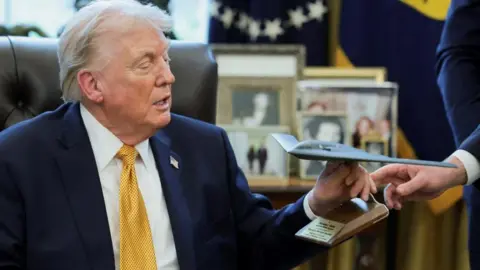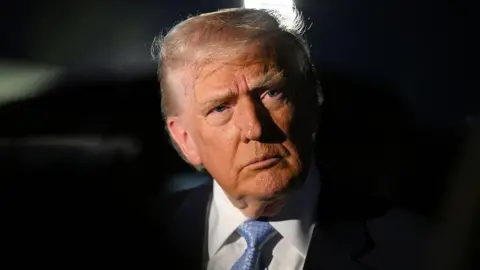
US President Donald Trump said on Monday that he is planning to delay a high stakes visit to China later in March by about a month because of the Iran war.
We've requested that we delay it a month or so, he told reporters at the White House, adding that it was important that he remained available to oversee the war.
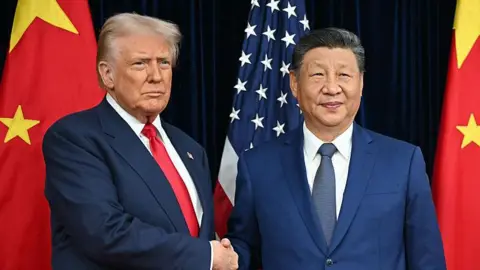
The meeting between Trump and Chinese President Xi Jinping is currently set to take place between 31 March to 2 April, following their last face-to-face talks in October last year.
Chinese foreign affairs spokesman Lin Jian said on Tuesday that Beijing and Washington are in talks over the timing and related matters of President Trump's visit to China.
The Iran war has eclipsed most of Trump's other foreign policy priorities, faced with an intensifying conflict and disruptions to the global oil supply, which has threatened to raise prices in the US.
Trump said he had proposed the delay solely to make sure he was around to manage the war.
I'm looking forward to being with him, he said, referring to Xi. We have a very good relationship. Trump added, There's no tricks to it either. It's very simple. We've got a war going on. I think it's important that I be here.
US Treasury Secretary Scott Bessent noted that the delay would not be a result of any insistence from Washington for Beijing to assist in the Gulf, or due to trade disputes. Bessent stated: The President wants to remain in DC to coordinate the war effort... Travelling abroad at a time like this may not be optimal.
The latest development follows Trump's comments to the Financial Times, indicating he might postpone the meeting if China did not assist in easing tensions in the Strait of Hormuz, a critical passage for energy shipments.
Trump's statements come amid increasing frictions between the US and China, exacerbated by the Iran war, with Beijing being a major buyer of Iranian energy exports and criticizing US and Israeli military actions against the nation.
Recent US measures include an investigation into trade practices involving China after a setback to Trump's tariff policy by the Supreme Court in February. Meanwhile, US and Chinese representatives have recently met in Paris for negotiations regarding investments, tariffs, and other economic issues.
Chinese trade representative Li Chenggang confirmed that both sides reached consensus on some issues during their discussions.