In brief
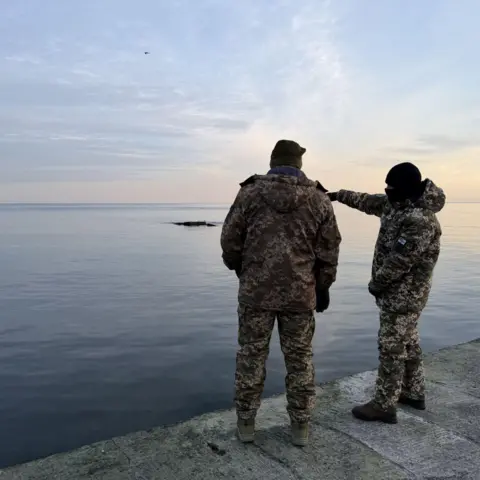
Ukrainian Navy divers are undertaking a dangerous mission to clear mines and unexploded ordnance from the Black Sea, remnants of the ongoing conflict with Russia. Under the constant threat of missiles and drones, they meticulously navigate the seabed to maintain safe routes for commercial shipping vital to Ukraine's economy.
The Black Sea is littered with deadly weapons. But no-one knows how many – or where they are.
When we approach it, we should be quiet, we should be slow – and we should be very accurate, says Vitalii, a 31-year-old Ukrainian Navy diver, as he describes swimming through dark waters towards explosive devices resting on the sea floor.
Vitalii is part of a 20-member team tasked with de-mining parts of the Black Sea that remain under Ukraine's control. Mines are some of the most insidious and long-lasting legacies of war, remaining deadly for decades. The sea mines laid by Moscow at the start of the full-scale invasion during its approach to Odesa have already caused fatalities.
The commander of the mine countermeasures group, known as Fox, estimates there are thousands of sea mines in the area, while additional dangers include missiles, artillery shells, and former WWII bombs washed into the seas due to the destruction of infrastructure like the Kakhovka dam.
Despite the risks, sea traffic continues, as commercial ships operate within the vital maritime export corridor, essential for incoming revenue to Ukraine. Navy spokesman Dmytro Pletenchuk emphasizes the ongoing balance of power at sea, where technological warfare replaces numerical superiority.
Clearing the seabed is a meticulous process that can take days as divers approach mines to disable them without triggering an explosion. They'll often identify underwater devices and, if needed, detonate them safely to clear shipping routes.
Last year, Ukrainian diving teams successfully neutralized over 50 mines, yet contend with thousands still remaining, alongside more recent unexploded ordnance. Though the British Navy has provided mine-hunting vessels, allocation for their use is still pending the ceasefire agreement.
As long as the conflict endures, divers like Vitalii remain committed to their mission, understanding that each step they take is a matter of life and death in the face of mounting underwater dangers.