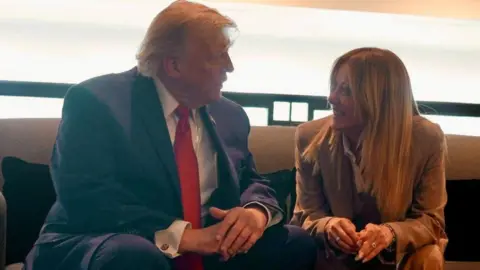
President Trump's favourite word is tariffs, emphasized during his pre-Christmas address to the nation, where he touted their role in generating jobs and economic growth. However, the extent to which these tariffs are reshaping the global economy is increasingly evident as projections for global growth have shifted. The International Monetary Fund (IMF) suggests a slowdown to 3.1% growth in 2026, down from previous estimates.
IMF head Kristalina Georgieva remarked, while growth deceleration has not been as severe as initially feared, it still signifies challenges for global aspirations. Other forecasts indicate an even bleaker outlook, criticizing the impacts of ongoing tariffs.
Maurice Obstfeld from the Peterson Institute for International Economics noted the surprisingly moderate global reaction to U.S. tariffs, attributing it partly to countries refraining from aggressive retaliation. This restraint helped avoid a more significant trade disaster. Nevertheless, the pressures of tariffs have inflated costs for businesses, hampered investment, and generated ongoing uncertainty in economic forecasts.
Despite these challenges, recent reports indicate that some sectors remain strong due to factors such as lower interest rates and creative business strategies. The UN trade agency has noted a record growth in global trade recently, even amid shortcomings linked to tariffs.
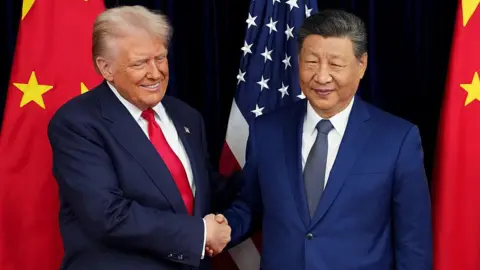
The interaction between trade policies and global economics continues to evolve, with significant updates awaited from upcoming trade discussions between the U.S. and China, and amidst plans from the EU to tighten oversight over imports.
With discussions around tariffs likely persisting, experts predict that the complexity of global trade relationships will demand continued attention well into 2026 and beyond.