In brief
Autonomous delivery robots, praised for convenience, are becoming a flashpoint in cities worldwide. Chicago’s John Roberts has spearheaded a petition demanding a blanket ban while the robots are tested for safety and rules. San Francisco and Toronto have already limited sidewalk use, and Manitoba’s Glendale council is considering a temporary ban. Concerns about pedestrian safety, vandalism and the impact on courier jobs are spurring protests. Analysts predict millions of robots will operate by 2034, prompting urgent calls for a regulatory framework.
'We had to get out of the way': The backlash over delivery robots
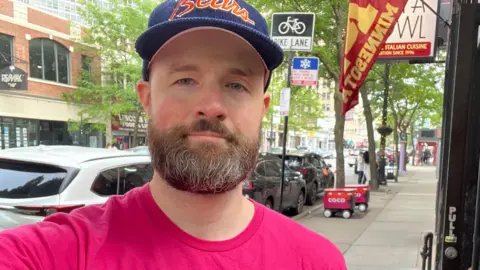
The first time Chicago resident John Roberts saw a delivery robot on his street he was impressed, calling it “neat” and “futuristic”. But his optimism faded when a robot appeared on the pedestrian sidewalk later, forcing his family to sidestep it.
Roberts now says pedestrians must “get out of the way” of autonomous devices that use sidewalks intended for people. He has launched a petition demanding a city‑wide pause on such robots until safety tests are complete and clear rules are drafted. The petition has gained 4,400 signatures.
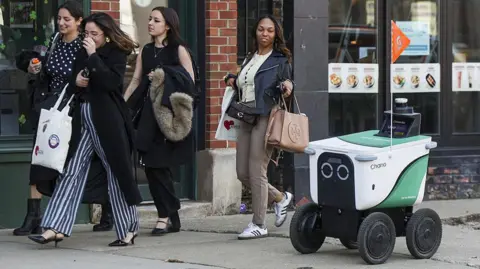
Delivery robots—essentially small, driverless carts that use cameras, sensors and GPS—are currently operating in cities across the US, UK, Japan, South Korea and Germany. They usually carry groceries or fast‑food, but incidents like collisions, “safety flag” injuries and interference with traffic have pushed some cities to intervene.
San Francisco has restricted robots to less busy parts of the city, while Toronto has prohibited sidewalk use entirely since 2021. Chicago recently banned their operation in two neighbourhoods.
Roberts has crewed a campaign to suspend all robots across the city. “There have been reports of robots causing traffic issues and blocking emergency vehicles when they act erratically at crosswalks,” he says.
Robots are also facing vandalism. In the UK’s Sheffield, Uber Eats vehicles were vandalised, and the company’s European operations director calls the robots “friendly and polite.” However, public perception remains uneasy.
The International Workers Union of Great Britain points to a big job loss risk. “If robots become a permanent reality, we’ll need pressure from government and local authorities to limit or ban them, or the human impact would be massive,” warns union president Alex Marshall.
Analysts predict a boom: the research firm Transforma Insight expects 2.1 million delivery robots worldwide by 2034. This surge is stirring a debate over a worldwide regulatory framework, insurance requirements, and public safety standards.
Roberts believes “there’s a sense that change like this, even when it’s unwanted, is inevitable. Yet we should choose the kind of future we move into.”
- Shared concerns about pedestrian safety ring in cities such as Chicago, San Francisco, Toronto, Glendale and Sheffield.
- Regulatory responses differ, ranging from limited access, sidewalk bans to no restrictions.
- Union fears about job losses and economic impact remain a key voice.
- Forecasts predict millions of robots will be on the ground by 2034.
- Calls for a global regulatory framework are growing louder.