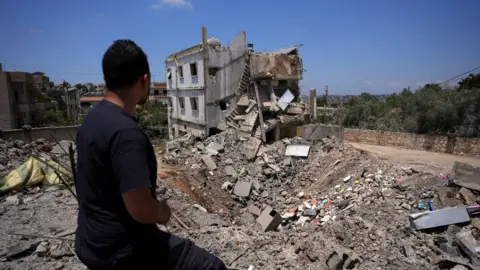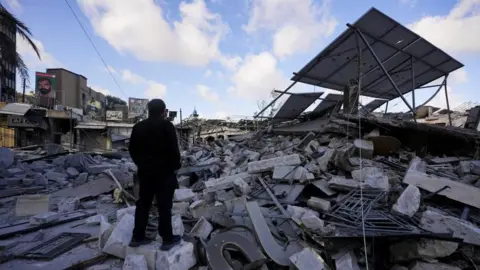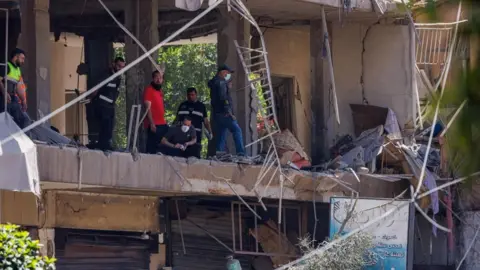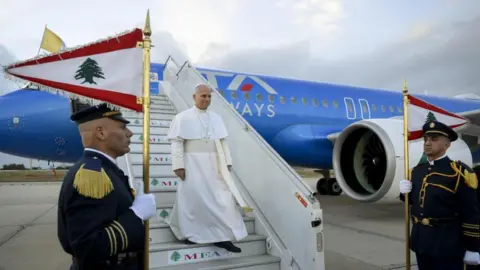
Pope Leo XIV has arrived in the Lebanese capital Beirut a week after Israeli air strikes hit the city. For a man known for his measured and careful demeanor, it is quite a statement to land in a conflict-affected country as his first destination abroad. The Pope has already spent three days in Turkey, showcasing his diplomacy, and offering insights into his approach as both spiritual leader and head of state of Vatican City.
Pope Leo's interactions with journalists are gentle and deliberate, contrasting with the passionate discourse of his predecessor, Pope Francis. While Francis spoke freely to reporters, sometimes requiring aides to manage the fallout from his statements, Leo appears to craft his words carefully.
As he stands at the podium in Istanbul, addressing the small Christian minority, one can see the emotional weight of his duties bearing down on him. He frequently reflects on the gravity of leading over a billion Catholics, seemingly overwhelmed at times by the role he now occupies.
In his initial remarks in Lebanon, Pope Leo reminded local politicians of their duty to serve their people during a time of governance issues in the nation. His visit is highly anticipated, bringing hope to not only the Christian community, which makes up a third of the country, but also echoing beyond religious lines. His first act was to call for leaders to focus on service to the public.
Despite tensions, including greetings from Hezbollah and anticipation from diverse religious communities, some criticized his visit. There were voices calling for acknowledgment of areas suffering due to ongoing violence, alluding to the need for a more consolidated recognition of the struggles faced by certain populations.
Pope Leo’s visit to Beirut is underscored with discussions on peace, and he has pledged to advocate for the creation of a Palestinian state as part of diplomatic dialogue in the region. He emphasizes that the essence of faith lies in its rejection of violence and conflict justification.
The Pope's initial foray into international diplomacy marks a significant moment as he finds his voice on the world stage, embracing the spiritual and administrative challenges that lie ahead.
Pope Leo's interactions with journalists are gentle and deliberate, contrasting with the passionate discourse of his predecessor, Pope Francis. While Francis spoke freely to reporters, sometimes requiring aides to manage the fallout from his statements, Leo appears to craft his words carefully.
As he stands at the podium in Istanbul, addressing the small Christian minority, one can see the emotional weight of his duties bearing down on him. He frequently reflects on the gravity of leading over a billion Catholics, seemingly overwhelmed at times by the role he now occupies.
In his initial remarks in Lebanon, Pope Leo reminded local politicians of their duty to serve their people during a time of governance issues in the nation. His visit is highly anticipated, bringing hope to not only the Christian community, which makes up a third of the country, but also echoing beyond religious lines. His first act was to call for leaders to focus on service to the public.
Despite tensions, including greetings from Hezbollah and anticipation from diverse religious communities, some criticized his visit. There were voices calling for acknowledgment of areas suffering due to ongoing violence, alluding to the need for a more consolidated recognition of the struggles faced by certain populations.
Pope Leo’s visit to Beirut is underscored with discussions on peace, and he has pledged to advocate for the creation of a Palestinian state as part of diplomatic dialogue in the region. He emphasizes that the essence of faith lies in its rejection of violence and conflict justification.
The Pope's initial foray into international diplomacy marks a significant moment as he finds his voice on the world stage, embracing the spiritual and administrative challenges that lie ahead.