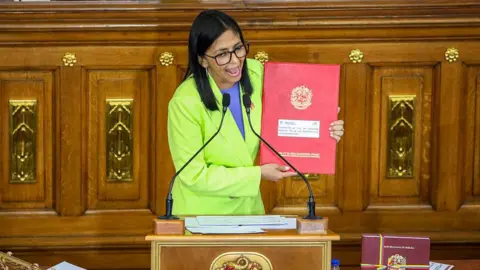
Venezuela's interim president Delcy Rodríguez has proposed new oil reforms in her first state of the union address since former president Nicolás Maduro was seized by the US.
Rodríguez stated her intention to reform the law limiting foreign involvement in the nation's oil sector, marking a significant shift from Maduro's policies. She emphasized a diplomatic approach towards the US, asserting that Venezuela must defend its dignity and honour amid the changes.
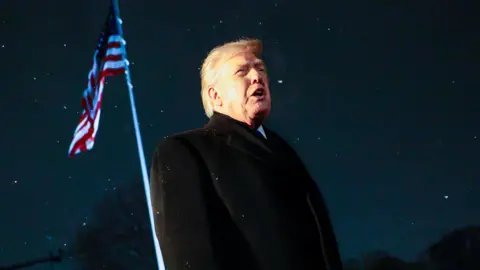
President Donald Trump has suggested that American oil companies could move into Venezuela, potentially benefiting both the local economy and the U.S. economy. Trump indicated that the US would manage future sales of sanctioned Venezuelan oil indefinitely.
Despite Trump’s encouragement for oil firms to invest at least $100bn in Venezuela, a corporate executive recently remarked on the country’s current status as uninvestable due to ongoing challenges.
Rodríguez, who was sworn in as interim president on January 5 following the US operation against Maduro and his wife Cilia Flores, explained the difficulty of delivering what was originally Maduro's annual report, as it was drafted shortly before the event that led to Maduro's removal.
She indicated readiness for direct diplomatic dialogue with the US, prioritizing national unity and stating her willingness to engage in discussions in Washington if necessary.
In her address, Rodríguez detailed the proposal to reform the hydrocarbon law, asking the legislative body for its approval. She highlighted that the existing law requires foreign partners to collaborate with the state-owned PDVSA, which must maintain a majority stake.
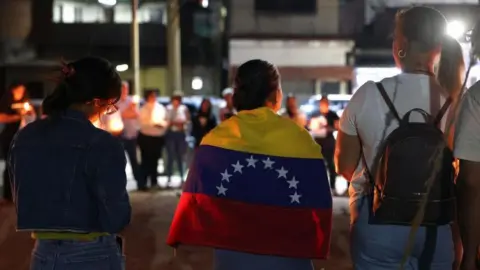
The proposed reforms aim to attract investment in unexplored fields and establish two sovereign funds focused on social welfare and infrastructure development. This initiative comes amidst a severe economic crisis in Venezuela, with food prices soaring and widespread concerns about the future.
Rodríguez's reforms align with increased interest from the US and private investors, particularly due to the country holding the world's largest proven oil reserves. Major US oil executives acknowledge that while Venezuela presents lucrative potential, substantial changes are needed to offer a trustworthy investment environment.
Trump reiterated that the US would control the engagements of companies operating in Venezuela, reinforcing the administration's pivotal role in determining which firms gain access. He assured that this would also result in lower energy prices for Americans.
Notably, Chevron represents the last major American company still operational in Venezuela, reflecting the complex and often fraught relationship between the nation and international oil entities.