In brief
A recent independent ballistic review confirms that several protestors in Delhi sustained pellet‑gun injuries during July’s violent clashes. The wounds, characterised by small round punctures, align with the spread patterns of birdshot pellets fired from a 12‑gauge shotgun at least 50 feet away. While Delhi authorities deny the use of pellet guns, the BBC’s findings, along with hospital scans of victims, highlight serious health risks and ignite calls for greater accountability.
On 20 July, tens of thousands of voters and youth marched to the Indian Parliament demanding reforms in education and the resignation of the education minister. Police and paramilitary forces – the Rapid Action Force and Central Reserve Police Force – responded with batons, tear gas and, according to independent experts, pellet guns.
Pellet guns are 12‑gauge shotguns loaded with birdshot cartridges that disperse dozens of lead pellets across a wide arc. The spread causes small simultaneous puncture wounds, a hallmark that forensic ballisticians recognise as distinct from tear gas or metal clank injuries.
Key forensic findings:
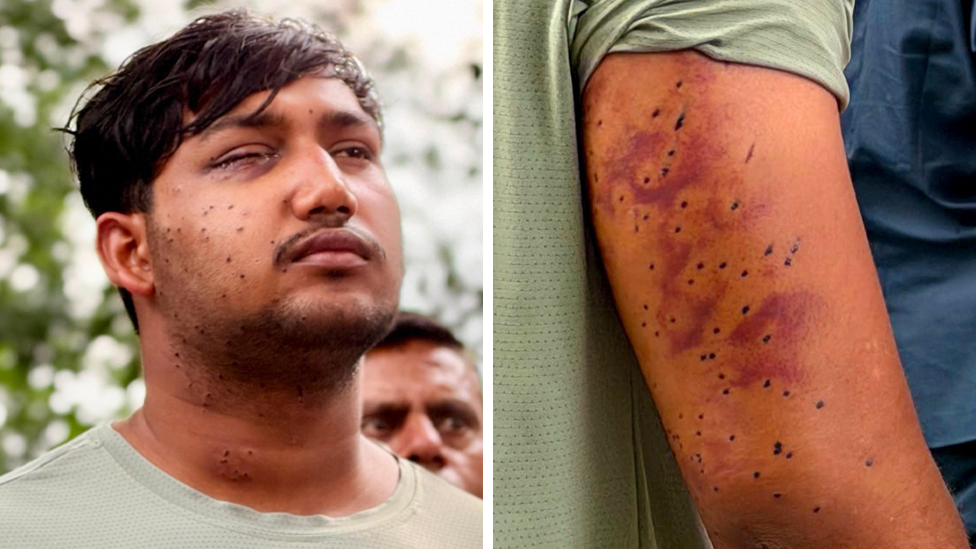
- Images of several protestors, including 19‑year‑old Sahil Lochab and 28‑year‑old journalist Mohit, show dozens of tiny circular holes on arms and torso.
- X‑ray scans from Safdarjung Hospital reveal 26 pellet wounds on Mohit’s right arm and four on his upper back; similar shrapnel was documented in a 50‑year‑old security officer, Shaikh Irshad Mansoori, who had over 40 pellets lodged in his body.
- Independent ballistics experts from the UK – Philip Boyce and NR Jenzen‑Jones – confirmed the wounds match birdshot trajectory at distances of 50–100 feet.
Delhi police denied any use of pellet guns. Superintendent of Police and CRPF chief Gyanendra Pratap Singh were queried by the BBC, yet have yet to respond. In Parliament, cabinet minister Jitendra Singh assured that only tear gas was employed, but did not address the pellet‑gun allegation.
Impact on victims:
- Lead from pellets can accumulate in the body, posing long‑term health risks.
- One victim, Mansoori, still reports pain more than ten days after injuries and has a pellet lodged in his neck deemed too dangerous to extract.
- Protestors are demanding justice, with opposition leader Rahul Gandhi calling for the dismissal of Home Minister Amit Shah and a full investigation.
If verified, this would mark the first instance of pellet‑gun use against citizens in India’s capital. The findings underscore the urgent need for transparent reporting on force usage and the protection of protestors’ rights during civil unrest.