Myanmar has denied committing genocide against the Rohingya people, saying The Gambia has failed to provide enough proof, as it began its defense at the UN's top court.
Ko Ko Hlaing, a Myanmar government representative, told judges at the International Court of Justice (ICJ) that the allegation was 'unsubstantiated.'
Earlier this week, The Gambia's foreign minister Dawda Jallow told the court Myanmar wanted to erase the minority Muslim population through its use of 'genocidal policies.'
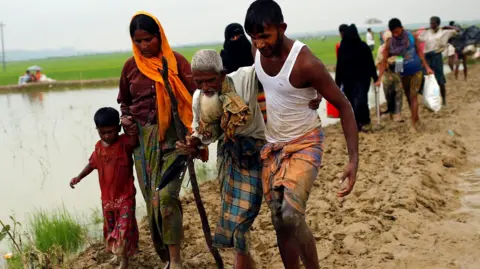
Thousands of Rohingya were killed and more than 700,000 fled to neighbouring Bangladesh during an army crackdown in Myanmar in 2017.
A damning report issued by the UN the following year said top military figures in Myanmar must be investigated for genocide in Rakhine state and crimes against humanity in other areas.
Myanmar, which has been under military control since it overthrew the civilian government in 2021, rejected the report and has consistently claimed its operations targeted militant or insurgent threats.
On Friday, Hlaing told the ICJ that 'Myanmar was not obliged to remain idle and allow terrorists to have free reign of northern Rakhine states', where the majority of Rohingya lived.
'These attacks were the reasons for the clearance operations, which is a military term referring to counter-insurgency or counter-terrorism operations,' Hlaing stated.
The Gambia launched its case against Myanmar in 2019, arguing that the Rohingya had suffered decades of appalling persecution, culminating in a violent military crackdown.
The ICJ has set aside three days to hear from witnesses, including Rohingya survivors, with a final ruling expected towards the end of 2026. This case could set a significant precedent in genocide and human rights law.