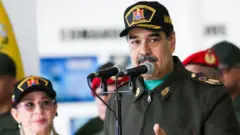
Venezuelan President Nicolás Maduro said on Thursday he was open to talks with the US on drug trafficking and oil, after weeks of an escalating pressure campaign against his government. In an interview with Venezuelan state TV, Maduro stated that he was ready for dialogue with the US 'wherever they want and whenever they want'.
He also evaded a question about President Donald Trump's statement that the US had hit a docking facility in Venezuela - reportedly the first such attack inside the country carried out by the CIA. US forces have been targeting vessels suspected of smuggling narcotics through the Caribbean and eastern Pacific for nearly three months.
There have been over 30 strikes on vessels as part of the Trump administration's 'war on drugs', resulting in more than 110 deaths since the first attack on a boat in international waters on September 2. The latest incident occurred when two suspected drug-carrying boats were struck on Wednesday, killing five people onboard, according to the US military.
While addressing allegations of US military actions, Maduro remarked, 'this could be something we talk about in a few days'. Beyond drug trafficking, Maduro expressed his openness to discussions on oil and migration. Trump's focus on targeting drug influxes, particularly fentanyl and cocaine, has intensified, coupled with increased rewards for information leading to Maduro's capture.
Maduro has firmly denied claims of being a cartel leader, accusing the US of using the 'war on drugs' narrative to undermine his government and target Venezuela's oil reserves. Experts suggest that Venezuela plays a minor role in global drug trafficking, primarily acting as a transit point for drugs produced elsewhere. Despite claims from the US, critics argue there is little evidence supporting assertions against targeted vessels.
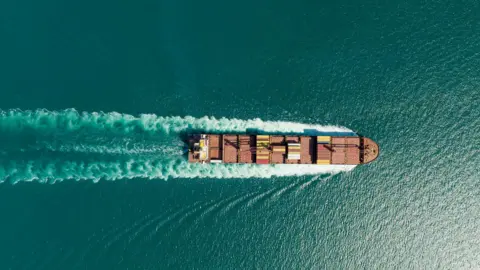
In recent actions, US forces seized oil tankers allegedly used for transporting sanctioned oil from Venezuela, which Maduro termed 'international piracy'. As the situation continues to evolve, both sides are custodying dialogue prospects amidst military pressures and international scrutiny.
He also evaded a question about President Donald Trump's statement that the US had hit a docking facility in Venezuela - reportedly the first such attack inside the country carried out by the CIA. US forces have been targeting vessels suspected of smuggling narcotics through the Caribbean and eastern Pacific for nearly three months.
There have been over 30 strikes on vessels as part of the Trump administration's 'war on drugs', resulting in more than 110 deaths since the first attack on a boat in international waters on September 2. The latest incident occurred when two suspected drug-carrying boats were struck on Wednesday, killing five people onboard, according to the US military.
While addressing allegations of US military actions, Maduro remarked, 'this could be something we talk about in a few days'. Beyond drug trafficking, Maduro expressed his openness to discussions on oil and migration. Trump's focus on targeting drug influxes, particularly fentanyl and cocaine, has intensified, coupled with increased rewards for information leading to Maduro's capture.
Maduro has firmly denied claims of being a cartel leader, accusing the US of using the 'war on drugs' narrative to undermine his government and target Venezuela's oil reserves. Experts suggest that Venezuela plays a minor role in global drug trafficking, primarily acting as a transit point for drugs produced elsewhere. Despite claims from the US, critics argue there is little evidence supporting assertions against targeted vessels.
In recent actions, US forces seized oil tankers allegedly used for transporting sanctioned oil from Venezuela, which Maduro termed 'international piracy'. As the situation continues to evolve, both sides are custodying dialogue prospects amidst military pressures and international scrutiny.