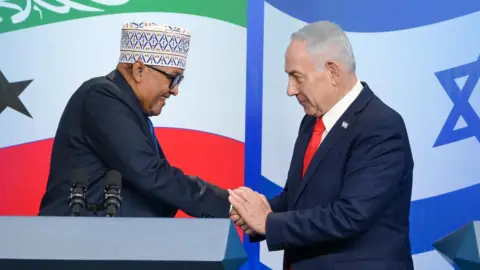
Israel has become the first country to formally recognize Somalia's breakaway region of Somaliland as an independent nation.
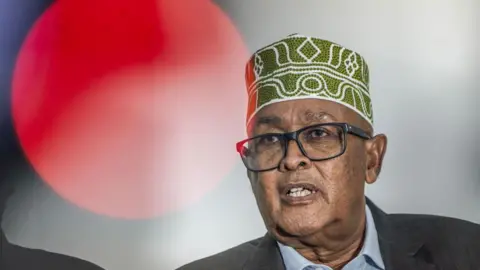
Prime Minister Benjamin Netanyahu stated that Israel intends to immediately expand cooperation in agriculture, health, and technology. Somaliland's president, Abdirahman Mohamed Abdullahi, called the development 'a historic moment'.
Recognition by Israel could encourage other nations to follow suit, thus enhancing the region's diplomatic credentials and access to international markets.
Somalia's Prime Minister, Hamza Abdi Barre, asserted that his country unequivocally rejected what he termed a deliberate attack on its sovereignty by Israel.
Abdullahi emphasized in a statement that Somaliland would join the Abraham Accords, which he described as a step toward regional and global peace.
He added that Somaliland was committed to building partnerships, promoting mutual prosperity, and enhancing stability across the Middle East and Africa.
The decision has been condemned by the foreign ministers of Somalia, Egypt, Turkey, and Djibouti, who collectively affirmed their 'total rejection' of Israel's announcement.
According to Israeli Foreign Minister Gideon Saar, both countries have agreed to establish full diplomatic ties that will include the appointment of ambassadors and the opening of embassies. 'I have instructed my ministry to act immediately to institutionalize ties between the two countries across a wide range of fields,' he stated.
Meanwhile, Egypt's foreign minister consulted with counterparts in Somalia, Turkey, and Djibouti to address concerns regarding Israel's declaration. Their joint statement emphasized support for Somalia's unity and territorial integrity and warned against unilateral actions that could destabilize the region.
The recognition of Somaliland has raised concerns among various nations about setting a dangerous precedent under international law. Recognition of parts of sovereign states could challenge established norms and fuel further disputes.
Historically, Somaliland declared independence from Somalia in 1991 following a civil war. Despite its self-proclamation as a republic, it has remained largely unrecognized globally and has sought to cultivate international relations to overcome its isolation.
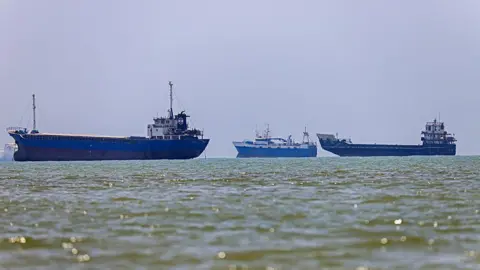
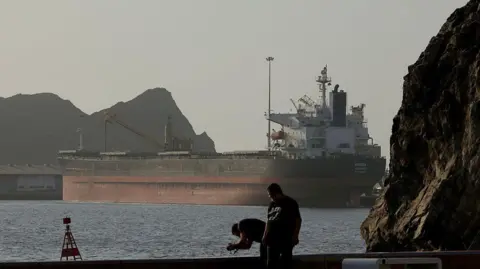
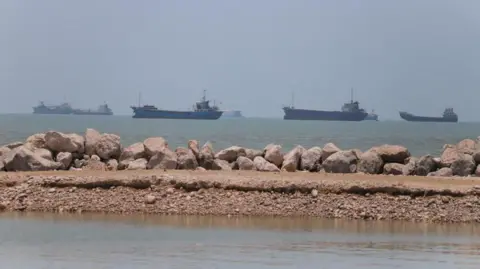
The strategic position of Somaliland on the Gulf of Aden, along with its own currency, passports, and police force, highlights its attributes as an independent entity. However, recent territorial disputes with Somalia and Ethiopia, including a controversial agreement to lease a coastal area for military use, underscore the complexities of the region's politics.