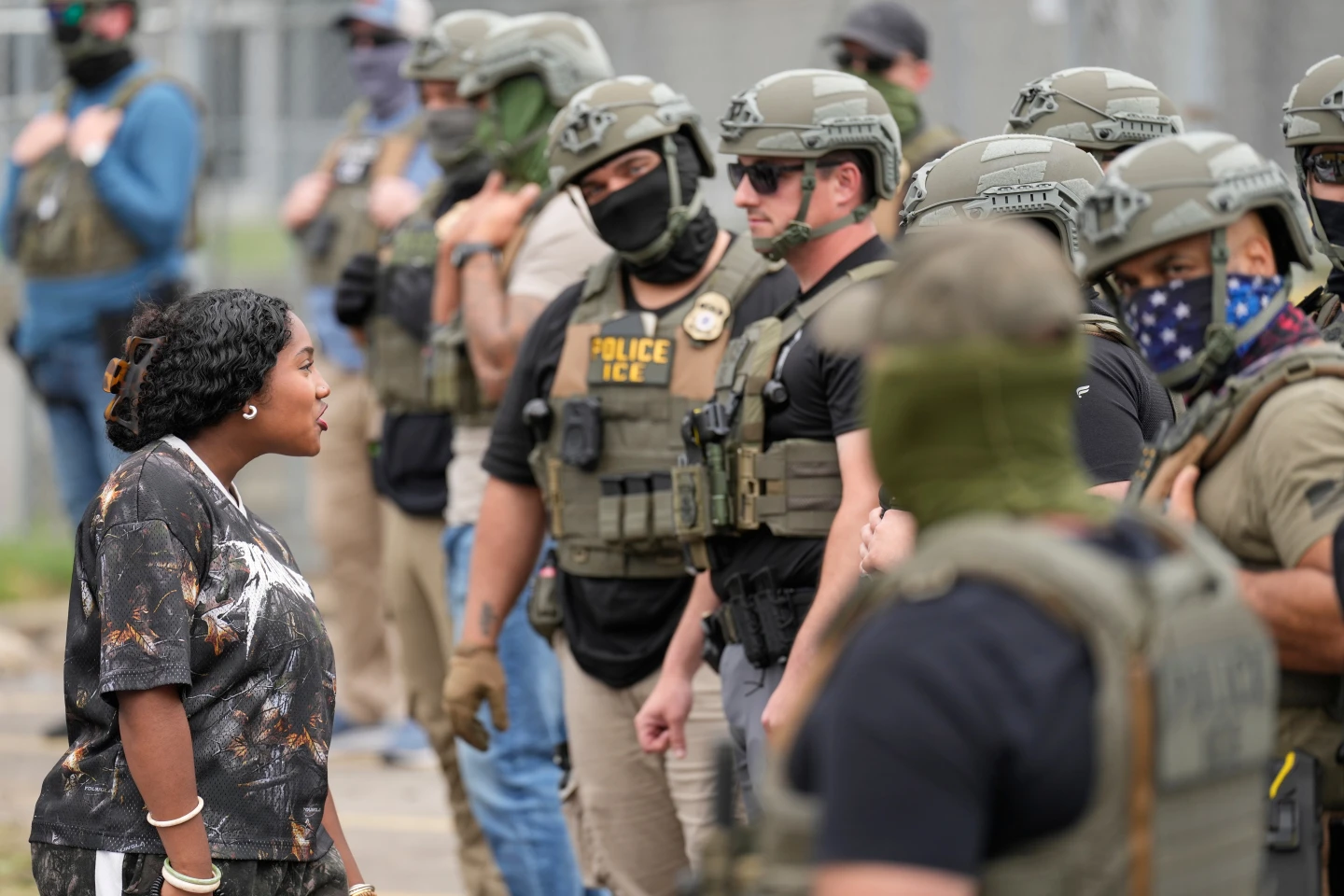
As President Donald Trump took office, a bilingual preschool in Washington, D.C., was forced to prepare for the possibility of Immigration and Customs Enforcement (ICE) agents arriving. CentroNía, known for its strong immigrant base, saw a shift in its operations as ICE officials became a frequent presence in the local community during 2023. Activities that once provided enriching extensions of learning, such as trips to parks, were curtailed for fear of attracting unnecessary attention to the staff and students.
The educational institution felt the pressure after the school had to cancel its traditional Hispanic Heritage Month parade, which usually celebrated the cultural identities of its students. Staff members, living in constant worry about their safety, began experiencing mental health struggles brought on by the toxic atmosphere, leading to decreased morale and heightened anxiety levels.
In a chilling illustration of this environment, a teacher from a Chicago Spanish immersion preschool was arrested by ICE agents during an operation. This event heightened fear among other educators and immigrant families dependent on child care services, revealing severe vulnerabilities in how education systems operate in immigrant communities.
Industry experts highlight that the child care sector is critically dependent on immigrant labor, with a significant percentage of educators coming from outside the U.S. Many of these individuals possess legal work status but still face anxiety due to the volatile immigration policies of the current administration. Reports indicate that plenty of immigrant workers in child care are leaving the industry altogether due to the heightened risks and challenges.
Myrna Peralta, CEO of CentroNía, shared insights into the disarray incurred by these circumstances: That really dominates all of our decision-making, she emphasized how ICE's local activity has dramatically reshaped the school's day-to-day operations.
Additionally, amid new scrutiny from immigration enforcement, schools now find themselves second-guessing how to operate without jeopardizing the safety of their staff and the families they serve. The community’s fear is palpable, with educators acknowledging changes in children's mental health and behavior as a direct result of the surrounding apprehension.
The current reality reflects a harsh narrative that underscores the significant impact of immigration enforcement on educational environments across the United States, as individuals both with and without legal status navigate an increasingly fraught landscape.