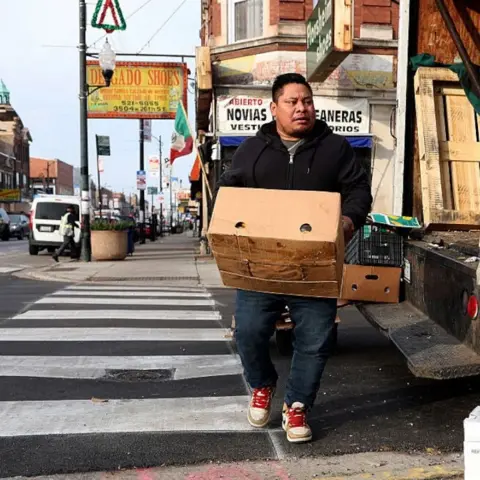
For weeks, Minneapolis has captured attention as protests erupted in response to the killings by federal immigration agents. Meanwhile, Chicago's Little Village, a predominantly Hispanic neighborhood, is wrestling with a silent crisis caused by the spike in ICE activities.
Operation Midway Blitz, part of the Trump administration's crackdown on undocumented immigrants, peaked recently, leading to increased visibility of ICE agents in the area, leaving residents feeling vulnerable and afraid.
Local business owners, like Carlos Macias of Carniceria y Taqueria Aguascalientes, report steep declines in earnings. “Business has dropped half during the week, sometimes more,” he shares, noting the atmosphere created by immigration raids has transformed the bustling neighborhood into something resembling a ghost town.
Fear reigns as the community witnesses ICE agents conduct raids, often leading to emotional chaos among patrons and employees alike. “They wore balaclavas and carried rifles. People ducked under tables and some ran in fright,” recalls Macias, highlighting the traumatic experiences that haunt many.
Many in Little Village feel the implications of the raids extend beyond personal fear, impacting the local economy severely. Alderman Michael Rodriguez notes reports from local vendors and shops indicating sales dropping between 30% to 60% as residents retract into their homes, fearful of deportation.
Although some city initiatives aim to bolster local businesses, the fear of ICE remains markedly prevalent. “We’ve never seen a situation like this. It's unnerving,” Rodriguez says, as the vibrant life along 26th Street diminishes.
Edwin and Luna, street vendors in 26th Street, express their reluctance to operate as frequently due to the looming threat, “They don’t respect if you’re from here.” Their comments encapsulate the anxiety reverberating within communities that once thrived on trade and commerce.
Despite the challenges, some businesses show resilience and continue operations. However, the presence of ICE has greatly altered their customer base and day-to-day operations. Citizens and local leaders are banding together, advocating for unity and support of one another during these daunting times.
As conditions evolve, the lasting effects of rising ICE activity loom large over Little Village, prompting discussions regarding immigration policy and its consequences on local economies during every ICE raid that takes place.