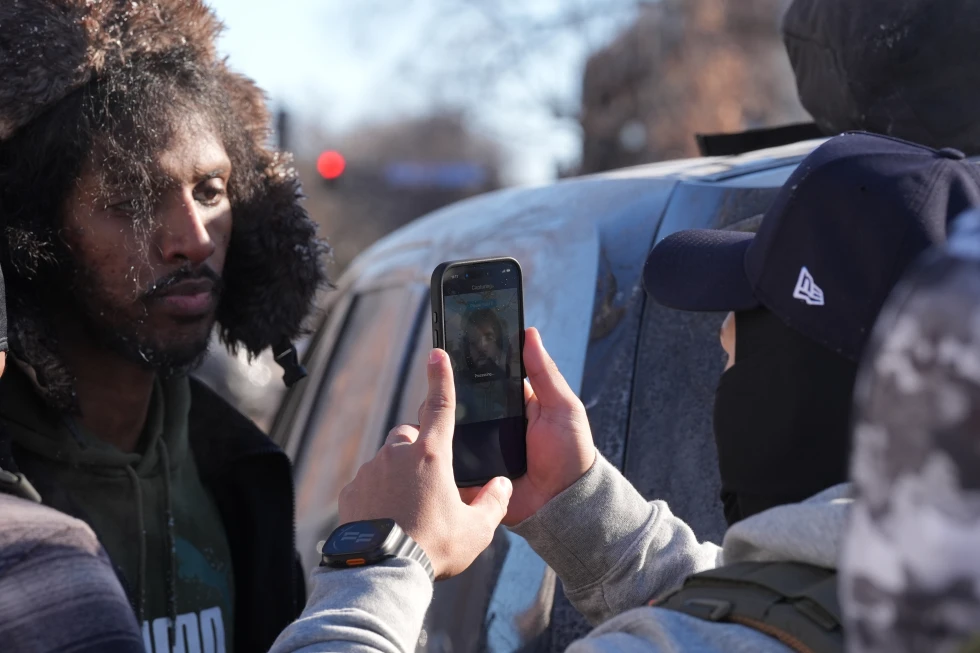
Luis Martinez was on his way to work on a frigid Minneapolis morning when federal agents suddenly boxed him in, stopping his SUV in the street.
Agents, mask-clad, demanded his ID. One agent held a cellphone close to Martinez’s face, scanning his features to capture biometric data while incessantly asking, Are you a U.S. citizen? This encounter reflects the aggressive tactics employed by the Trump administration in its immigration enforcement efforts in Minnesota, described as the largest of its kind.
Despite government assurances that operations are focused on serious offenders, revelations indicate a pervasive reliance on biometric surveillance and extensive interconnected databases, which risk implicating innocent citizens alongside targeted individuals.
Rights experts express concerns over the lack of transparency and oversight in these expanding surveillance measures, warning that the mechanisms can ensnare both citizens and noncitizens indiscriminately.
Over the past year, the Department of Homeland Security (DHS) has substantially enhanced its capabilities for collecting, sharing, and analyzing individual data through extensive inter-agency agreements.
In Martinez's case, the face scan resulted in no match, and only after producing his U.S. passport was he released. He remarked on the shifting perception of Minnesota’s landscape, stating, It's terrifying. It’s not safe anymore.
Advocates point out that federal authorities now utilize extensive surveillance techniques, capable of tracking individuals through license-plate readers and facial recognition technology unobtrusively.
In response to public inquiries regarding the methods employed, DHS has refrained from providing details, asserting that the use of technology aids in lawful enforcement operations.
Dan Herman, a former senior adviser at Customs and Border Protection, expressed alarm about the readiness of the government to access personal data and the potential for its misuse without proper checks to safeguard civil liberties.
Alongside this, DHS has revealed the use of a facial recognition application, Mobile Fortify, which was allegedly employed over 100,000 times in field operations. However, the actual consent involved during instances of scans raises questions about ethical practices.
As the government ramps up surveillance technology, concerns mount regarding the treatment of lawful citizens under the guise of national security enforcement, leaving many apprehensive about the future of personal freedoms.