Ghost particles from Aurora IceCube win physics Nobel

Belgian-born physicist Prof Francis Halzen has won the Nobel Prize in Physics for his pioneering work on the IceCube Neutrino Observatory, which detects elusive ghost particles from space and brings the distant Universe into view.
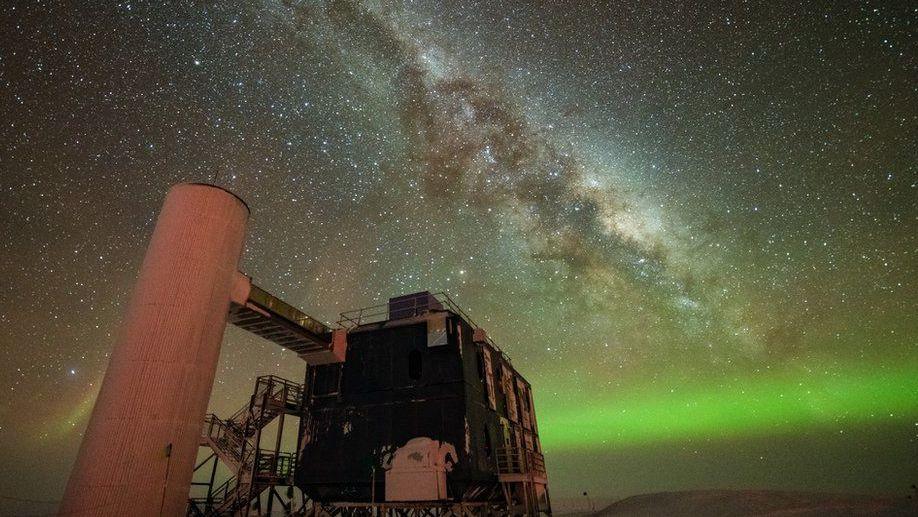
Halzen led the development of IceCube, a cubic‑kilometre array of light sensors buried in Antarctic ice that captures rare flashes produced when high‑energy neutrinos interact with atomic nuclei.
Neutrinos travel almost unimpeded through matter and magnetic fields, so their arrival directions point back to cosmic accelerators such as supernova remnants, gamma‑ray bursts and black‑hole environments.
“Francis Halzen’s vision and leadership have paved the way for a new kind of astronomy,” said Professor Mark Pearce, Chair of the Nobel Committee for Physics.
The breakthrough has opened a new window on the Universe, allowing scientists to study extreme processes that conventional telescopes cannot reach.