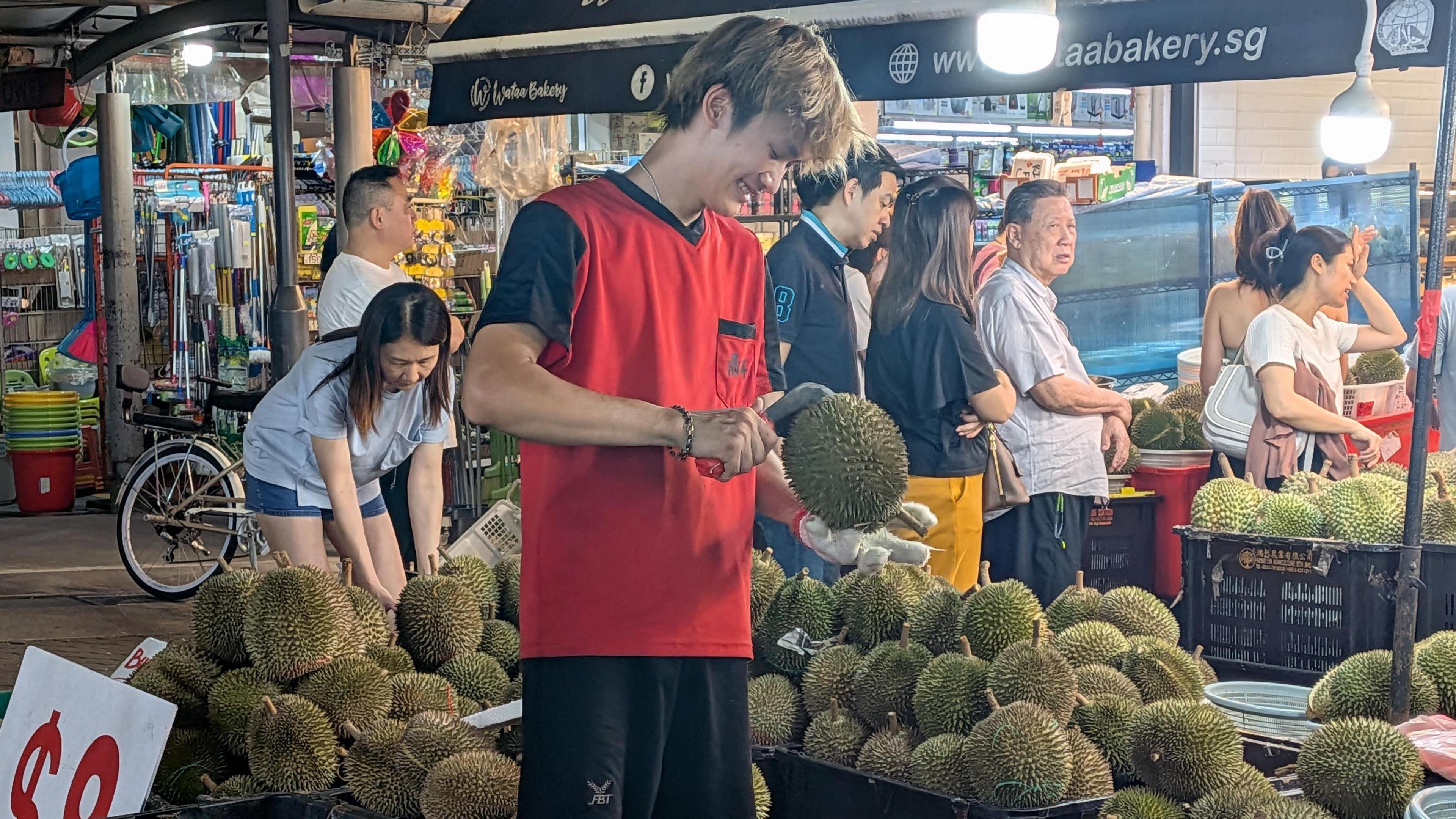
For days the line around the Durian Ninja stalls in Tampines, Singapore, has grown longer than the orchard itself. Two ripe fruits are handed out each day to every passer‑by, sparking a frenzy that pulls crowds up to two hours in the sun.
That generosity is a response to a year‑long flood of durian from Malaysia. The island’s growers, many building on rubber and oil palm land, have opened new plantations that now bear their prized Musang King trees.
In 2026 the harvest was unusually plentiful, pushing the overall supply of the fruit beyond demand. Prices have fallen to levels never seen before; sellers now offer Musang King at roughly half of the price last year.
Farmers report that their earnings are shrinking, forcing them to slash prices or diversify into other fruit such as bananas. “We had to reduce our Musang King price nearly a third, to 50 ringgit a kilogram,” one farmer comments. The market pressure is high, and many trees produce fruit that does not meet export standards.
The Malaysian government has intervened, buying fruit at a basic price to cushion smallholders. The aim is to revive market confidence and preserve quality over cheapness, according to officials.
In Singapore, stall owners keep up the free‑fruit bout, hoping to broaden the audience. The stall charges as low as one dollar per small palm‑size portion for those who stay. This mixed strategy has attracted lighter and older shoppers and is expected to lure younger customers as well.
For consumers, the move means a rare opportunity to taste premium durians without paying the usual premium. Yet for growers, the glut threatens a precarious future, highlighting the need for market balance and sustainable cultivation practice.