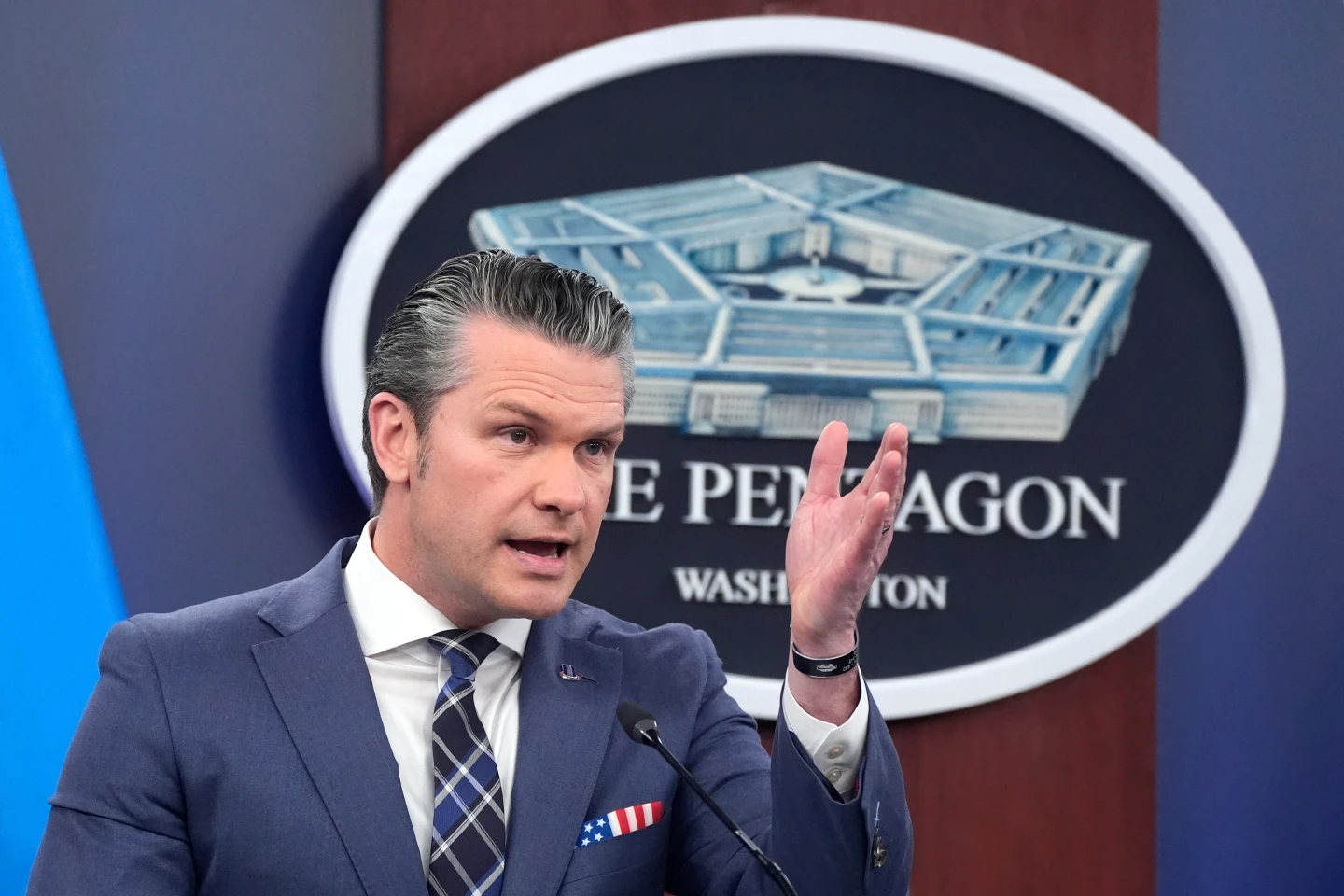
WASHINGTON (AP) — Defense Secretary Pete Hegseth conducted his first monthly Christian worship service at the Pentagon amidst the ongoing Iran war. During the service, he fervently prayed, asking that 'every round find its mark' as American troops continue their operations overseas.
Hegseth emphasized the significance of gathering in this setting, noting how it resonates with the efforts of countless American service members currently deployed. He recited a prayer originally used by a military chaplain for troops involved in capturing Venezuelan leader Nicolás Maduro, invoking strength and unity in the military's actions.
The fervent evangelical faith represented by Hegseth highlights a growing trend of religious affirmation in the military leadership. His invocation of scriptures from the Psalms further illustrates this, as he quoted, 'I pursued my enemies and overtook them, and did not turn back till they were consumed.'
Despite the increasing intertwining of faith and military duties, Hegseth's rhetoric and approach have been subjects of scrutiny, particularly as they coincide with a significant conflict such as the Iran war. Critics argue that this specific religious advocacy could present issues within a constitutionally secular framework.
Recently, a lawsuit was filed by Americans United for Separation of Church and State regarding the Pentagon's worship services, claiming such actions violate the separation of church and state principles. This action reflects concerns over federal employees feeling pressured to attend these religious services.
In the broader context, Hegseth has outlined a vision for military chaplains to refocus on spiritual ministry rather than therapeutic approaches, aiming to make the chaplain corps 'great again.' These announcements reflect a renewed push towards a more traditional and overtly Christian practice within military chaplaincy.
Veterans Affairs Secretary Doug Collins, a Southern Baptist pastor, preached at the recent service, underscoring the trend of evangelical leaders presiding over military worship gatherings. The significant focus on Christian doctrine during these services emphasizes a shift in the spiritual landscape of the military, prompting both community support and rising challenges from advocacy groups.
As discussions unfold over the balance between religious practices and military obligations, one thing remains clear: the intertwining of faith and governance in the military sphere is evolving, capturing attention amidst the backdrop of ongoing global conflicts.