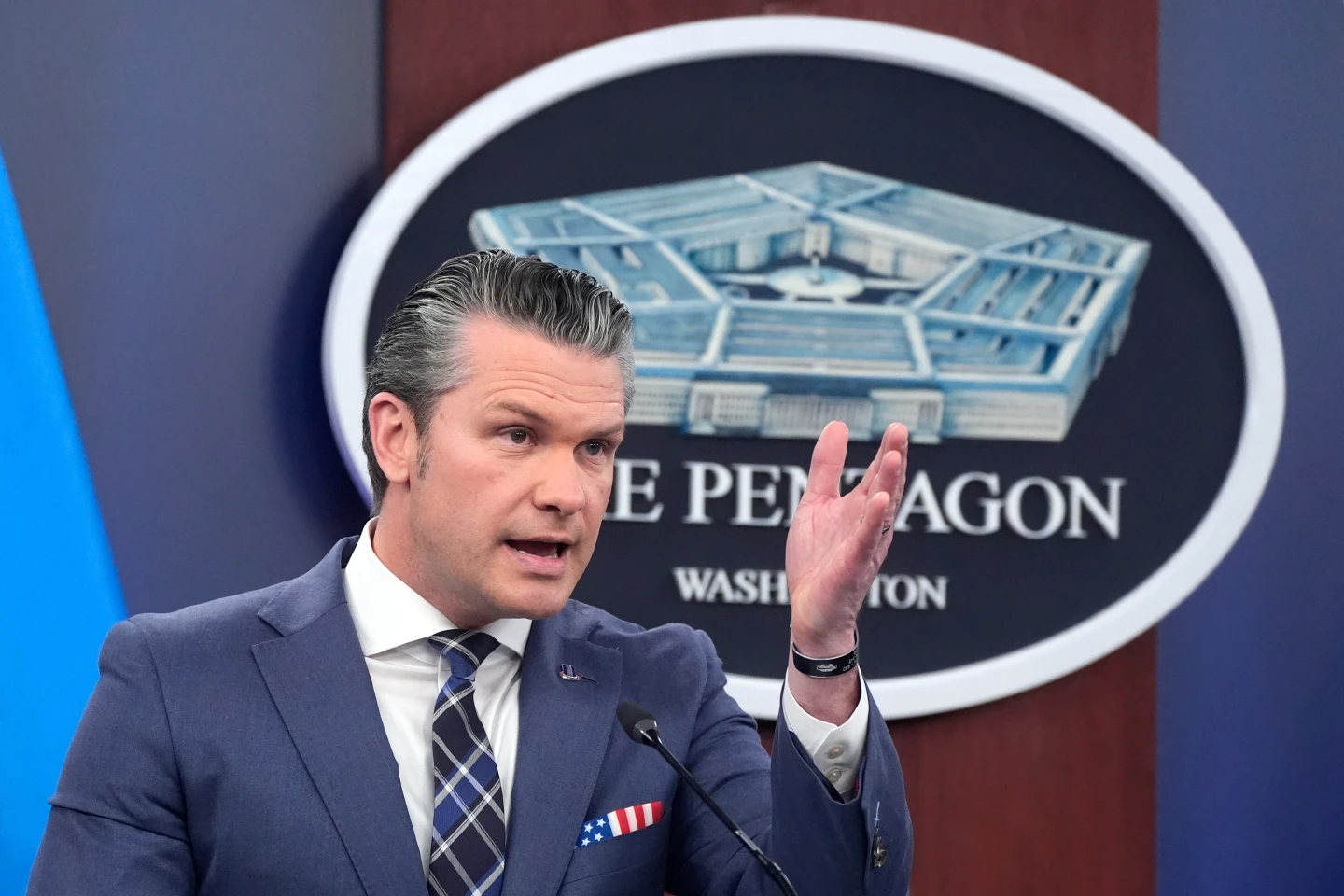
WASHINGTON (RTW News) — Since his appointment, U.S. Defense Secretary Pete Hegseth has actively fused his evangelical beliefs with military practices, raising eyebrows among various sectors. His tenure is marked by the introduction of monthly Christian worship services for military personnel and the integration of biblical quotes in promotional military videos.
As U.S. tensions with Iran escalate, Hegseth's religious rhetoric has taken on heightened significance. In recent briefings, he referenced Psalm 144 while addressing U.S. military operations against Iranian forces, emphasizing a narrative intertwining faith and warfare. This action could violate the military's secular mission and jeopardize its established pluralistic principles.
Critics, including scholars focused on religious extremism, argue that Hegseth's approach may inflame animosity toward the U.S. in predominantly Muslim regions. Matthew D. Taylor, a critic of Hegseth's methods, pointed out that the intermingling of religion and military action could provoke further distrust among Muslim populations, a notion underlined by previous U.S. military engagements.
Moreover, Hegseth is known for his controversial support of the Crusades, advocating for their historical importance while displaying tattoos incorporating crusader imagery. His comments come at a sensitive time, as many perceive a 'clash of civilizations' narrative fueled by Hegseth's leadership.
The Secretary's religious influences raise questions about the future reform of military chaplains and the diversity of belief systems in an increasingly pluralistic army. His calls for elevated religious focus among military chaplains highlight the transformative changes he aims to implement, which some fear may alienate service members by introducing an overtly Christian narrative at a time of widespread global conflict.
As Hegseth integrates his conservative Christian views into military policy, the implications for the secular fabric of the armed forces remain contentious, with ongoing debates about its necessity and potential consequences.