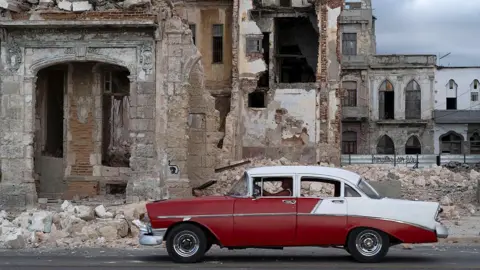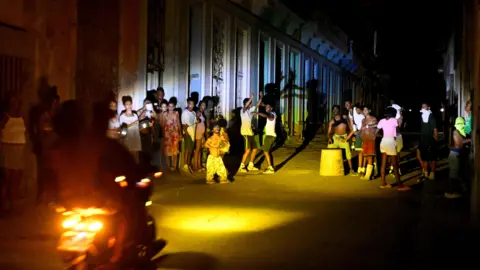
More than 10 million people have had power cut to their homes and businesses across Cuba after the country's national electrical grid collapsed for the second time in a week. Cuba's energy ministry stated that a total disconnection of the National Electrical System has occurred in a social media post. It confirmed that protocols for restoration are already beginning to be implemented.
Cuba's grid operator UNE is gradually restoring electricity, prioritizing vital facilities like hospitals and water systems. This month alone, the country has witnessed three major blackouts, largely due to a US fuel blockade that limits foreign oil imports necessary for operating power stations.
The aging electricity infrastructure coupled with chronic fuel shortages has compounded the crisis. Furthermore, a coalition of international socialist groups has recently arrived in Havana, offering aid such as solar panels, food kits, and medicines as part of the Nuestra America convoy aimed at supporting the Cuban government.
However, rising public dissent has been evident throughout Cuba; residents banged pots and pans in central Havana, while protests escalated in the town of Morón where the Communist Party headquarters was attacked and set on fire. Public demonstrations are illegal in Cuba, and participants risk incarceration.
In response to the situation, President Miguel Díaz-Canel has emphasized the need for defense preparations against potential US military actions. Initial bilateral talks between the US and Cuba are reportedly underway to address the ongoing crisis, although no progress has been publicly disclosed. With the political climate tense, the Deputy Foreign Minister of Cuba affirmed that the nation's political structure is not up for negotiation.
Cuba's grid operator UNE is gradually restoring electricity, prioritizing vital facilities like hospitals and water systems. This month alone, the country has witnessed three major blackouts, largely due to a US fuel blockade that limits foreign oil imports necessary for operating power stations.
The aging electricity infrastructure coupled with chronic fuel shortages has compounded the crisis. Furthermore, a coalition of international socialist groups has recently arrived in Havana, offering aid such as solar panels, food kits, and medicines as part of the Nuestra America convoy aimed at supporting the Cuban government.
However, rising public dissent has been evident throughout Cuba; residents banged pots and pans in central Havana, while protests escalated in the town of Morón where the Communist Party headquarters was attacked and set on fire. Public demonstrations are illegal in Cuba, and participants risk incarceration.
In response to the situation, President Miguel Díaz-Canel has emphasized the need for defense preparations against potential US military actions. Initial bilateral talks between the US and Cuba are reportedly underway to address the ongoing crisis, although no progress has been publicly disclosed. With the political climate tense, the Deputy Foreign Minister of Cuba affirmed that the nation's political structure is not up for negotiation.