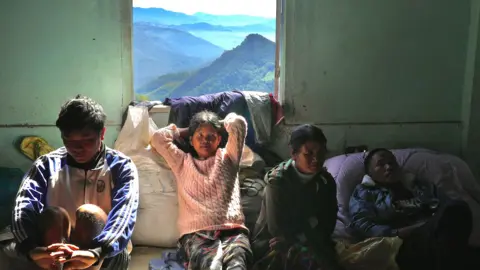
Late one night last month, Iang Za Kim heard explosions in a neighbouring village, then fighter jets flying overhead. Terrified, she rushed out of her home to see smoke rising from a distance. We were terrified. We thought the junta's planes would bomb us too. So we grabbed what we could – some food and clothes and ran into the jungles surrounding our village, she recounts.
Iang is among thousands of civilians fleeing their homes in western Chin State as the Burmese military escalates its offensive with air strikes and ground attacks, aiming to recapture territory ahead of elections scheduled for 28 December.
As Iang and other displaced individuals gather in makeshift shelters across the border in India's Mizoram state, they reveal their dual fears: the immediate threat of military violence and being compelled to participate in what they call a sham election. If we are caught and refuse to vote, they will put us in jail and torture us. We've run away so that we don't have to vote, she explains.
Many displaced have described the junta’s current offensive as the most brutal in over three years. Civilians not only face bombs but also the looming threat of forced involvement in an election marking the continuation of military rule. With the National League for Democracy party, which won past elections, barred from tenure, many residents see this circus as an extension of the dictatorship rather than a choice for democracy.
Witnessing firsthand the destruction and terror wrought by their own government, elderly civilians like Ral Uk Thang share harrowing recollections of torture and loss. We're afraid of our own government. They are extremely cruel, he states, recounting experiences of friends arrested and tortured.
Reports of bombings targeting schools and hospitals have surfaced, highlighting the indiscriminate violence affecting civilians and challenging claims by the junta of conducting free and fair elections.
Among the injured are young fighters who, although engaged in combat against the military, are victims of the ongoing chaos. Abel, an 18-year-old fighter, suffered severe injuries while fighting for territory lost to the junta. In the face of overwhelming odds and infrastructure devastation, those resisting are facing rising casualties.
Sui Khar, vice chairman of the Chin National Front, emphasizes that the sham elections and ongoing military operations serve to prolong oppression rather than fulfill the democratic aspirations of the Burmese people. As military advances seem unrelenting, hope also diminishes for many displaced individuals and those longing for the restoration of democracy in Myanmar.