In brief
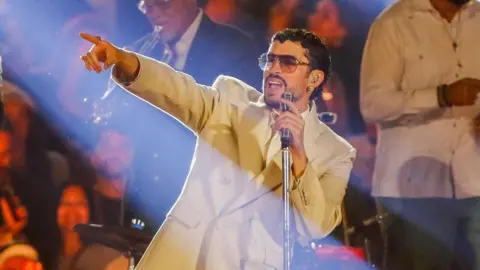
With his upcoming performance at Super Bowl LX, Puerto Rican superstar Bad Bunny stands at a pivotal moment in US cultural discourse. As the first artist to headline the halftime show entirely in Spanish, he brings attention to immigration issues and his Puerto Rican identity, sparking controversy among conservative viewers. Amidst criticism, Bad Bunny aims to unite audiences through music, promising a performance focused on joy and cultural pride.
As Bad Bunny steps onto the world's largest stage for Super Bowl LX, he is no stranger to the high-profile criticisms that accompany his ever-evolving artistry. The Puerto Rican megastar is set to headline the halftime show on Sunday, defiantly bringing his voice to a platform that has seen its share of controversies.
With millions expected to tune in, Bad Bunny—who has garnered significant attention for his outspoken opposition to US immigration policies—has ignited discussions that extend far beyond mere entertainment values. Critics on the right have labeled him as part of a 'woke culture,' with some even calling for a boycott of the event, while others rally to support his progressive stances.
Super Bowl halftime shows have a storied history of shifting social conversations, from Janet Jackson's notorious wardrobe malfunction to Beyoncé's iconic performances that addressed racial injustices. In this context, Bad Bunny's rise, underscored by his recent Grammy triumphs, has placed him squarely in the spotlight, making him the first performer to take the stage solely in Spanish.
Political figures, including former President Donald Trump, have voiced disapproval of the artist's selection, emphasizing the need for a performance that aligns with their values. Yet, despite the backlash, Bad Bunny has consistently advocated for unity, aiming to represent his culture and community's struggles while inviting audiences to celebrate their shared humanity.
At a recent press conference, he articulated his vision for the Super Bowl stage, emphasizing: 'I know that the world is gonna be happy this Sunday, and they're gonna have fun, and they're gonna dance and have a good time.' His determination to highlight these issues—through entertainment—represents his broader effort to use influence for societal change.
As members of the Latino community see reflections of their struggles in his work, many wonder what messages he will weave into his performance amidst the backdrop of political narratives. The potential to address divisive topics in an environment fraught with cultural contention adds layers of anticipation to the performance. Will Bad Bunny serve as a voice for those marginalized in the political discourse, and how will the American public respond?
With a promise to create an impactful moment that resonates with many, Bad Bunny's performance isn't just about music; it's about redefining what it means to be a performer in American culture today. As the NFL seeks to broaden its reach among diverse audiences, Bad Bunny's presence signals a significant cultural shift that might redefine the halftime show's role for years to come.