In brief
The 1973 cult classic The Wicker Man was envisioned by director Robin Hardy as the first part of a trilogy. After the release of The Wicker Tree in 2011 and Hardy’s death in 2016, his eldest children, Justin and Dominic, discovered a hidden archive that included a script for the unfinished finale. With the unveiling of the long‑lost script, they completed production on Wrath of the Gods, filming in Shetland in spring 2025. The film premiered at FrightFest on Friday, a bittersweet milestone after the late director’s passing. The new chapter honors Hardy’s legacy and his mother’s uncredited contribution to the original film.
Robin Hardy’s iconic 1973 folk‑horror film The Wicker Man was never meant to stand alone. In interviews, the director explained that it was the opening act of a trilogy that would explore themes of mythology, faith and the clash between modernity and tradition.
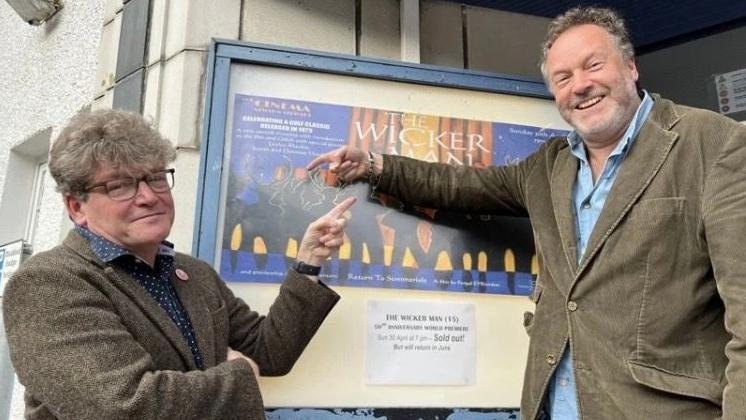
A decade later, The Wicker Tree (2011) brought the storyline closer to completion, but Hardy’s passing in 2016 at the age of 86 left the final film unfinished. The Hardy brothers—Justin, a former Emmy and BAFTA‑nominated director, and Dominic, an art historian in Montreal—were determined to honour their father’s vision.
The breakthrough came when a buyer of Justin’s ancestral home uncovered six sacks of letters, scripts and storyboards tied to Robin Hardy and his original trilogy. The boys sifted through the materials for months, eventually locating a written draft for the final chapter now titled Wrath of the Gods.
The new film is set in the Shetland Islands, where a grieving widow arrives to bury her late husband on the island of Hel. The community treats her with suspicion, and escalating disappearances force a confrontation with a tangled history of sorcery and superstition.
Filming began in Shetland in spring 2025, featuring an international cast: Game of Thrones actor Francis Magee, Norwegian actress Christiane Schaldemose, and local talent such as Lynsey Rendall and John Haswell. The production team faced extreme weather, requiring ingenuity to simulate a monsoon in a typically sunny day.
The final sequence, a dramatic burning of a massive wicker Man figure, hinges on traditional mythic imagery. While the film’s premiere at London’s FrightFest is a celebratory moment for the Hardy family, it is also bittersweet as the late director Justin had recently passed away at 61.
The film, dedicated to Justin’s mother Caroline—who died in 1984 unrecognised as an uncredited executive producer of the original 1973 film—seals the trilogy. Wrath of the Gods now stands as Robin Hardy’s complete cinematic legacy, remembered for its unsettling tone and cultural impact across the horror landscape.