In brief
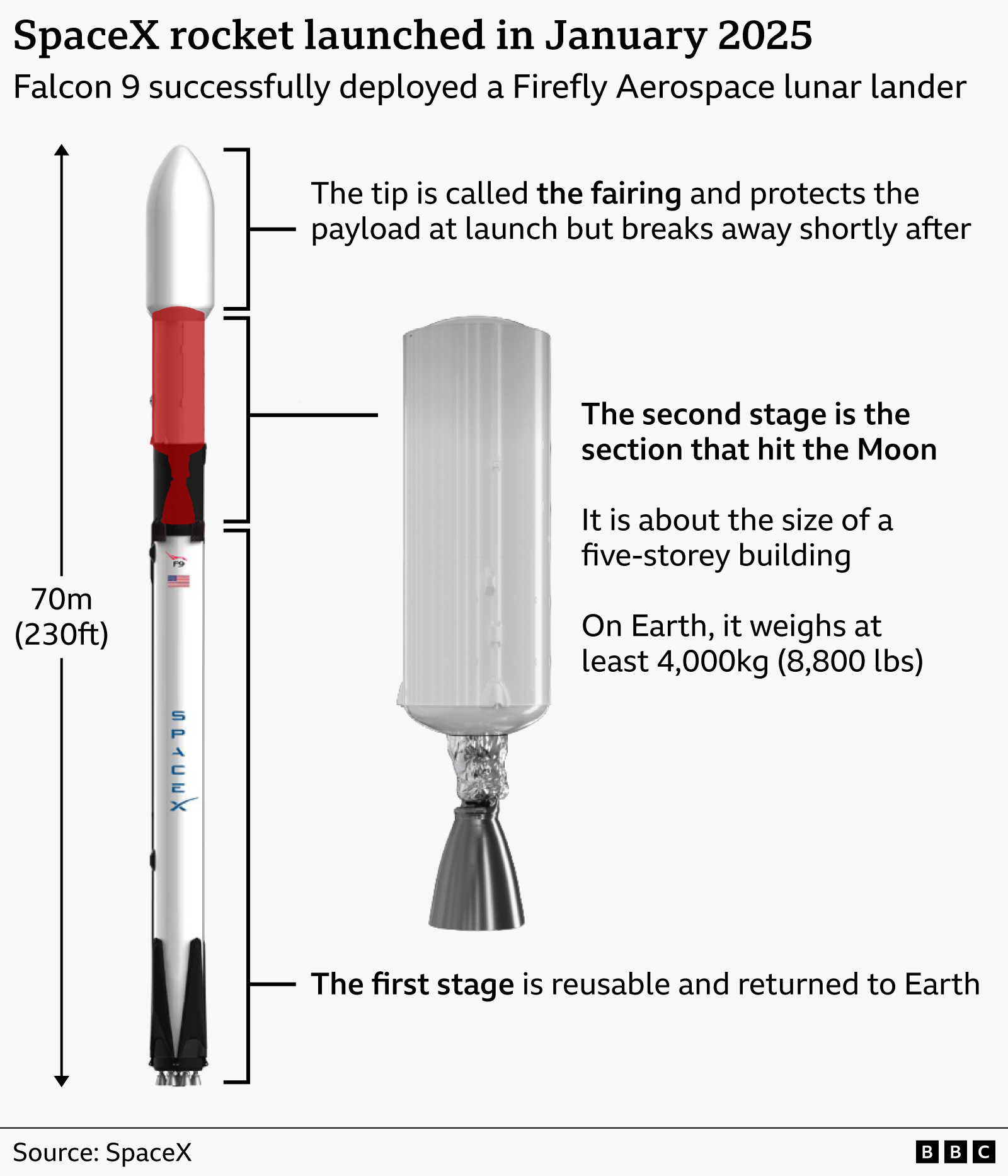
Scientists are treating the accidental impact of a SpaceX Falcon 9 upper stage on the Moon as a rare, laboratory‑like event. The 4‑ton payload slammed into the lunar surface at 5,400 mph, near the Einstein crater, creating a new impact site that could be examined by lunar orbiters and powerful telescopes. The precise mass, speed and trajectory of the stage give researchers an unprecedented chance to test models of crater formation, ejecta distribution and seismic effects. This experiment also promises fresh insights into the Moon’s regolith composition, informing future lander safety and surface operations. With several decades of human‑made probes already crashing into the Moon, this latest impact adds a new chapter to understanding how no‑back‑up debris accumulates in space.
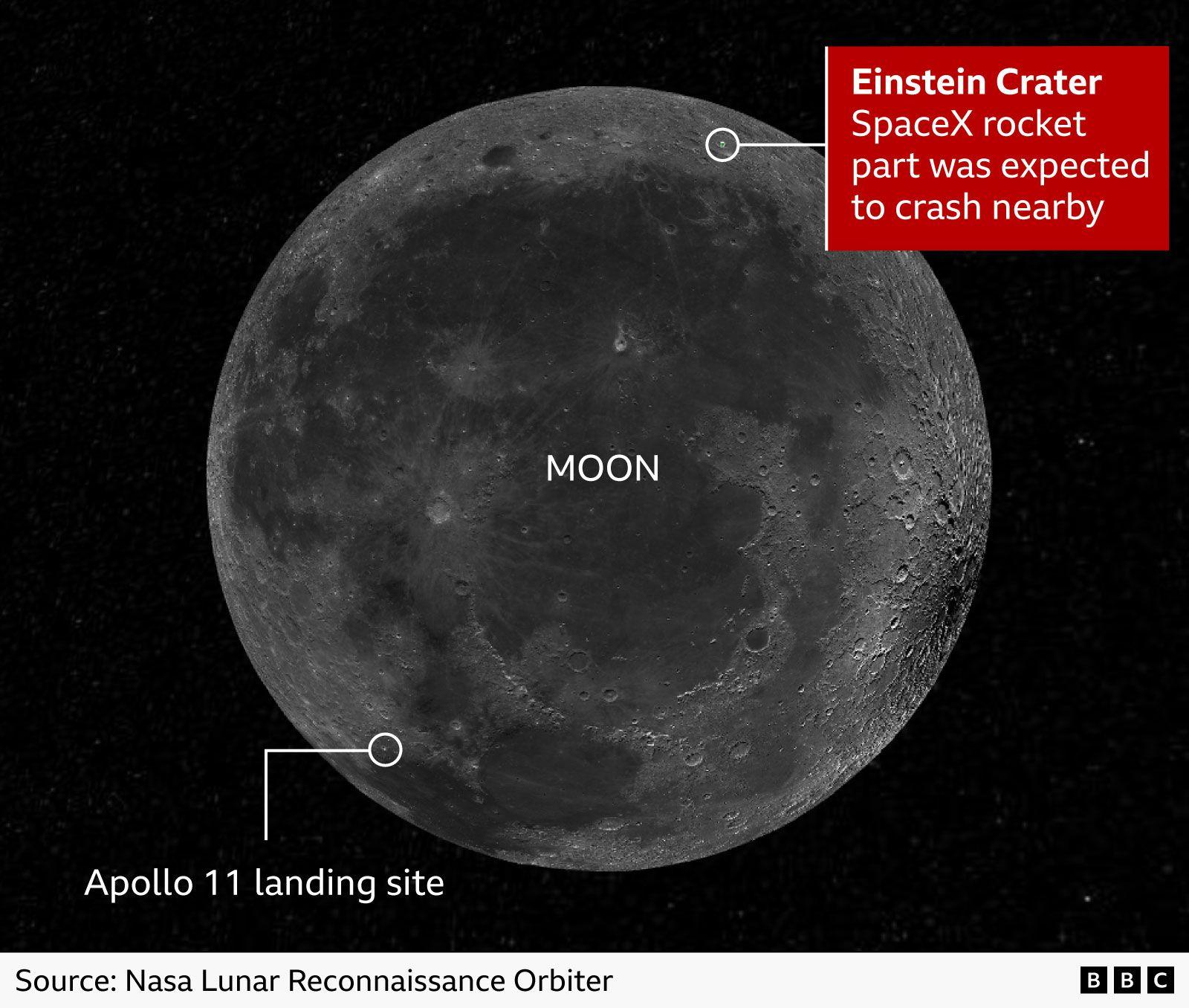
On Wednesday, the spent second stage of a SpaceX Falcon 9 rocket slammed into the lunar surface at roughly 5,400 mph (8,700 km/h), creating a new crater near the Einstein feature. Scientists had predicted the trajectory: a July‑orbiting vehicle shedding its upper stage, then gravitational nudges from Earth, Moon and Sun propelled it toward the Sun‑lit surface of the Moon.
The brief flash that marked the impact was too faint to be seen by amateur astronomers, even with large telescopes. While upper‑stage debris could potentially spread paint and dust across dozens of kilometres, the most valuable data will come from Luna‑scale imaging. NASA’s Lunar Reconnaissance Orbiter will capture images before and after the crash, allowing a direct comparison of the new crater to the pristine lunar surface.
Because the impactor’s mass (about 4 ,000 kg) and speed are known with high accuracy, the event turns an accidental collision into a controlled experiment. Researchers can use the new crater to test models of how impacts excavate lunar regolith, launch ejecta, and generate seismic waves. These insights translate into practical benefits for future landers and potential Moon bases, helping engineers gauge how far debris can travel and how the ground might shake.
The phenomenon is not unprecedented – humans have launched dozens of probes that have deliberately or accidentally landed on the Moon since 1959. Past missions, from Luna 2 and NASA’s Ranger probes to the 2009 LCROSS test, have similarly shed light on lunar composition and water ice. Yet the clean‑room precision of the Falcon 9 hole‑up makes this case unique, providing clear, measurable parameters that earlier impacts lacked.
As data from telescopes and orbiters are processed – hours, days, even weeks of image‑processing may follow – the scientific community will soon be able to model the impact and interpret the debris flow. Little wonder why it is described as a “dream moment” for planetary scientists: it offers both a fresh look at the Moon’s surface and a test bed for future interplanetary exploration.