In brief
In a significant effort to diminish China's grip on the critical minerals market, the US launched a trade strategy during the first Critical Minerals Ministerial attended by key global partners. The initiative aims to promote access and investment in essential minerals for technology manufacturing, amidst concerns about China's export regulations.
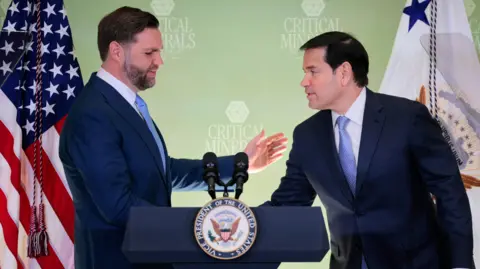
The US has launched an effort to form a trade zone for critical minerals that are key to making everything from smartphones to weapons as it tries to break China's dominance of the industry. On Wednesday, the State Department hosted the first Critical Minerals Ministerial event - which was attended by countries and organisations including the UK, European Union, Japan, India, South Korea, Australia and the Democratic Republic of Congo. Delegates discussed the availability of and access to minerals crucial to the manufacture of things like computer chips and electric vehicle batteries. The mining and processing of such critical minerals, which include rare earths, is dominated by China. In remarks released by the US government, Vice President JD Vance and Secretary of State Marco Rubio did not mention China by name. Instead, Vance referred to the 'foreign supply' of such minerals flooding global markets, making it difficult for other countries with mineral deposits to secure the financing needed to produce them. The US planned to use tariffs to stop critical mineral prices falling too low, which can deter investment, he said. David Copley, a special assistant to President Donald Trump, stated the US intends to 'deploy hundreds of billions of capital into the mining sector to get projects going'. Investments have already been made in several companies, including rare earths magnets maker MP Materials and Lithium Americas, which produces material key to rechargeable batteries, he said. US Trade Representative Jamieson Greer also said that the US, Japan and the European Commission are developing 'coordinated trade policies and mechanisms' in order to collectively avoid potential issues with access to important minerals. Ahead of the meeting, a Chinese Foreign Ministry spokesperson said 'countries need to follow the principles of market economy and international economic and trade rules, step up communication and dialogue'. The event was part of a broader effort by the US government to counter China's ability to use its dominance of the industry as leverage in trade negotiations. On Monday, Trump announced the creation of a critical mineral reserve, called 'Project Vault', worth almost $12bn (£8.8bn). Industry figures welcomed the announcement. 'It's critical to see the United States take decisive steps to shore up our supply of all kinds of minerals and rare earths,' said Wade Senti, president of Advanced Magnet Lab. Wednesday's event took place on the same day that Trump had a phone call with his Chinese counterpart Xi Jinping, which the US president described as 'very positive.' China has a chokehold on rare earths and has tightened its grip over exports in recent months, requiring companies in China to get government approval before shipping the minerals abroad. When the curbs were tightened in October, it dealt a major blow to the US, whose industries are heavily dependent on these imports. The Chinese government soon eased those stricter measures but analysts say it is using its dominance as a key bargaining chip in trade talks with Washington.