In brief
The largest US‑South Korean drill, Ulchi Freedom Shield, was abruptly paused after President Donald Trump ordered the Pentagon to substantially reduce the exercise. Seoul claimed it was a joint decision, yet officials had no prior knowledge of the move, which rattled regional allies such as Taiwan and Japan. Trump has hinted at a future meeting with North Korean leader Kim Jong‑Un, but the decision has left South Korea wary of the demands that might come from the North, especially regarding Iran. While Korean President Lee Jae‑Myung praised Trump’s break‑up, experts worry that the early stop illustrates a deeper uncertainty in US‑Korea security commitments.
The United States and South Korea’s annual Ulchi Freedom Shield exercise, typically involving 18,000 troops from Seoul and 11 allied nations, was abruptly halted this Friday after President Donald Trump ordered the Pentagon to significantly reduce the drill. The announcement came just days after the exercise was underway, catching Korean officials by surprise. Seoul’s foreign minister, Cho Hyun, presented the decision as a mutual agreement, yet admitted that no one in Seoul had been briefed on Trump’s intent to scale back before the exercise began.
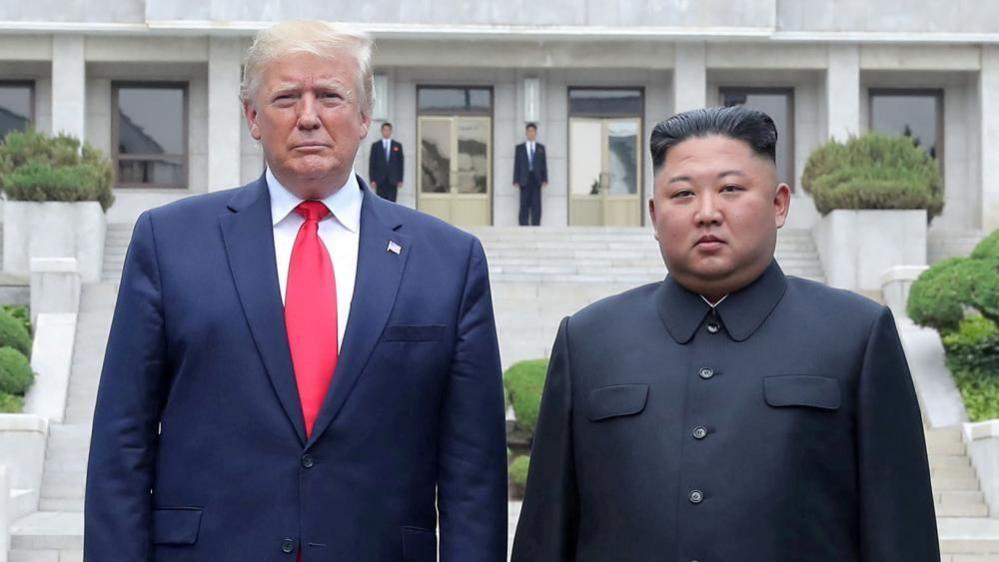
The early stop is shaking the confidence of allied partners such as Taiwan and Japan, both of whom rely on US security guarantees in the region. Trump has additionally criticised Seoul for refusing to join him in a war against Iran, and declared his intention to meet Kim Jong‑Un later this year, a move that is met with mixed reactions across the Korean Peninsula.
South Korea has long viewed Ulchi Freedom Shield as a core demonstration of US commitment to defend it against Pyongyang, but the abrupt truncation has deepened fears that the United States may reduce or abandon its presence in the peninsula altogether. Experts warn that the US may soon also reduce its 27,000 troop deployment in South Korea, or alter its denuclearisation policy without Seoul’s consultation.
The decision is also entwined with trade concerns; Trump has publicly complained that Seoul’s $1 billion annual hosting spend is inadequate and that Korea delays its $350 billion pledge to invest in American companies. This blend of domestic policy and security has put South Korea on the brink of seeking a more independent defence posture, with some voices even advocating the acquisition of its own nuclear deterrent, a proposition that most of the South Korean public resists.
Despite Trump’s statement that the early stop is a “bold decision,” and President Lee Jae‑Myung’s post on X praising the move, the lack of transparency has only heightened doubts about the reliability of US support. North Korea, meanwhile, remains steadfast in its demand for nuclear capability, and Kim Jong‑Un’s recent meetings with Trump have not yielded any concrete agreements. In a broader context, the U.S. might now face increasing pressure to negotiate with a North that is gaining military experience through the Russia‑Ukraine war and aligning more closely with China.