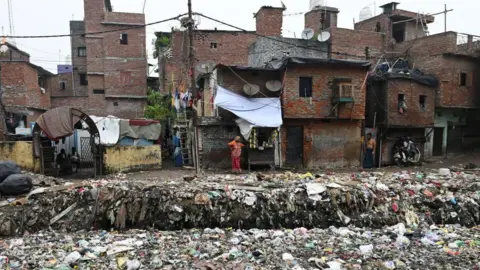
Want the royal charm of Jaipur? Don't come here, just buy a postcard, a local taxi driver quipped during my recent visit to the north-western Indian city. His remarks reflect a resigned hopelessness about urban decay that plagues not only Jaipur but many Indian cities, living in dire conditions characterized by traffic congestion, polluted air, and mountains of uncollected waste. Despite hundreds of billions spent on state-funded infrastructure, Indian cities rank poorly on livability indexes, leaving citizens frustrated.
In Bengaluru, dubbed the 'Silicon Valley' of India, traffic snarls have prompted public outcry, while in Mumbai, protests have erupted over pothole-filled roads. Delhi's air quality crisis worsens annually, prompting health advisories. This raises concerns about why the country's rapid GDP growth is failing to rejuvenate its cities.
Experts point out structural governance issues as a root cause. Unlike China, which has effectively utilized a centralized planning model to manage urban growth, India's decentralized framework lacks robust local governance. The 74th Amendment of the Indian Constitution attempted to empower town councils but its provisions remain largely inapplicable, leading to a vacuum in data and oversight.
The struggle for effective city governance exemplifies broader themes of urbanization without adequate infrastructure. As issues like air quality movements gain prominence, experts believe that India will only see substantial change when public discontent reaches a boiling point, similar to historical urban crises in other parts of the world.
In Bengaluru, dubbed the 'Silicon Valley' of India, traffic snarls have prompted public outcry, while in Mumbai, protests have erupted over pothole-filled roads. Delhi's air quality crisis worsens annually, prompting health advisories. This raises concerns about why the country's rapid GDP growth is failing to rejuvenate its cities.
Experts point out structural governance issues as a root cause. Unlike China, which has effectively utilized a centralized planning model to manage urban growth, India's decentralized framework lacks robust local governance. The 74th Amendment of the Indian Constitution attempted to empower town councils but its provisions remain largely inapplicable, leading to a vacuum in data and oversight.
The struggle for effective city governance exemplifies broader themes of urbanization without adequate infrastructure. As issues like air quality movements gain prominence, experts believe that India will only see substantial change when public discontent reaches a boiling point, similar to historical urban crises in other parts of the world.