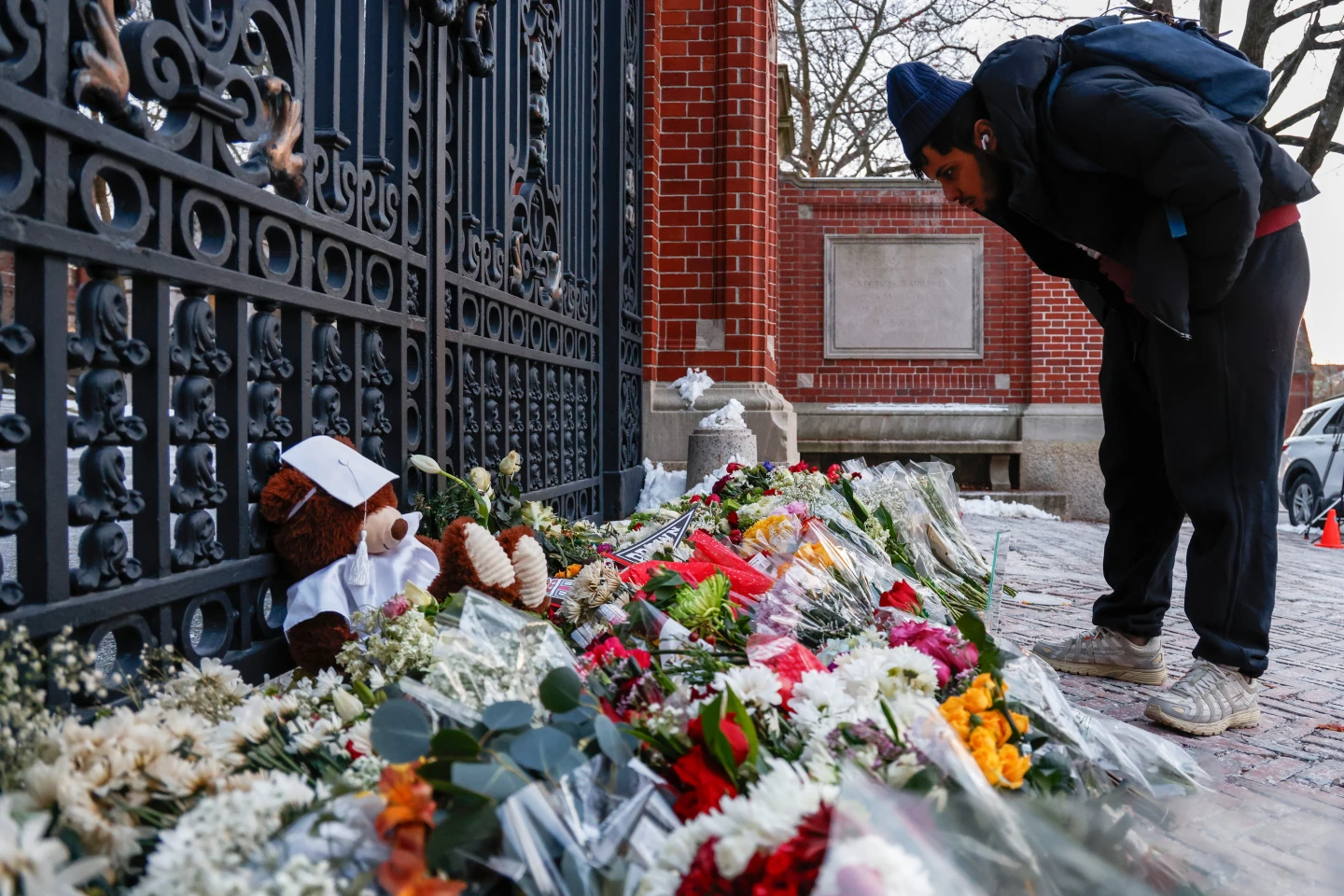
PROVIDENCE, R.I. — The tragic mass shooting at Brown University has sparked demands for heightened security on campus, as students are increasingly frustrated by the university’s inability to effectively utilize its surveillance systems. During a busy exam season, the gunman entered a crowded lecture hall, leading to a horrific incident that left two students dead and nine others injured.
In the aftermath of the shooting, law enforcement is scrambling for leads after a person of interest was released without charges. Investigators are looking for security footage from nearby local residences and businesses but have found limited evidence.
The fact that we’re in such a surveillance state but that wasn’t used correctly at all is just so deeply frustrating, stated Li Ding, a nearby student, expressing concern over the campus's security lapses.
In response to these security failures, Ding is amongst hundreds of students rallying for action, signing a petition aimed at increasing security across campus. Honestly, the students are doing a more effective job at taking care of each other than the police, Ding remarked.
The investigation continues as police and the FBI released video footage showing the potential shooter wearing a mask. A reward of $50,000 was announced for information leading to their capture. FBI officials described the investigation's nature as “painstaking work,” emphasizing the community's patience while they work diligently to identify the assailant.
While Brown University has surveillance cameras, significant gaps in the system exist, especially in the building where the shooting occurred. Providence police are still canvassing the area for tips and camera footage as the search for evidence continues.
Students reported mixed experiences with the university's emergency alert system, expressing confusion during the prolonged lockdown caused by the shooting. Some felt uninformed and relied on friends or media outlets for updates.
Security experts noted that colleges often face challenges responding to crises like active shooters due to a lack of resources and training compared to municipal law enforcement agencies. This tragic event emphasizes the urgent need for enhanced security protocols on university campuses.
The community is left grappling with the aftermath of violence and questions about safety in educational spaces, as the demands for comprehensive security measures grow louder.
In the aftermath of the shooting, law enforcement is scrambling for leads after a person of interest was released without charges. Investigators are looking for security footage from nearby local residences and businesses but have found limited evidence.
The fact that we’re in such a surveillance state but that wasn’t used correctly at all is just so deeply frustrating, stated Li Ding, a nearby student, expressing concern over the campus's security lapses.
In response to these security failures, Ding is amongst hundreds of students rallying for action, signing a petition aimed at increasing security across campus. Honestly, the students are doing a more effective job at taking care of each other than the police, Ding remarked.
The investigation continues as police and the FBI released video footage showing the potential shooter wearing a mask. A reward of $50,000 was announced for information leading to their capture. FBI officials described the investigation's nature as “painstaking work,” emphasizing the community's patience while they work diligently to identify the assailant.
While Brown University has surveillance cameras, significant gaps in the system exist, especially in the building where the shooting occurred. Providence police are still canvassing the area for tips and camera footage as the search for evidence continues.
Students reported mixed experiences with the university's emergency alert system, expressing confusion during the prolonged lockdown caused by the shooting. Some felt uninformed and relied on friends or media outlets for updates.
Security experts noted that colleges often face challenges responding to crises like active shooters due to a lack of resources and training compared to municipal law enforcement agencies. This tragic event emphasizes the urgent need for enhanced security protocols on university campuses.
The community is left grappling with the aftermath of violence and questions about safety in educational spaces, as the demands for comprehensive security measures grow louder.