Three days of public mourning in Tehran for its slain supreme leader ended with a major political spectacle the men now in charge wanted the world to see.
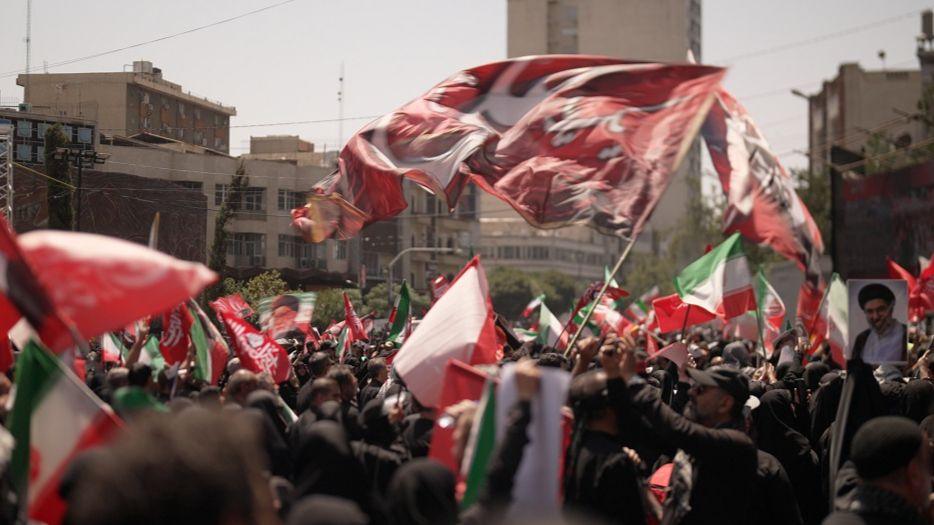
The hulking funeral cortège carried the coffins of Ayatollah Ali Khamenei and four family members, inching along a 10km route that was slowed and often stopped by millions of mourners – one of the largest public gatherings in many years.
In a week of funeral events, Monday’s march was the most significant, carefully choreographed and steeped in political messaging of resistance and revenge. While many stayed away, hurt by two wars, soaring inflation and recent anti‑government protests, the eyes of the world watched the spectacle.
Behind the chanting of “death to America” and “death to Israel”, irritated viewers observed a side of the Islamic Republic’s propaganda machine. Some blamed Khamenei for the security crackdown that killed thousands during his tenure as commander‑in‑chief.
A courser on a flatbed truck, painted with the green, red and white of Iran’s flag, bore the five caskets – including one for Khamenei’s 14‑month‑old granddaughter – all victims of Israeli‑American air strikes on 28 February.
Red, the loudest colour in the crowds of bereaved wearing black, amplified calls to avenge the supreme leader’s assassination. English‑speaking posters singled out Trump as the main target, while an Iranian messaging app urged supporters with slogans such as “Our revenge is inevitable” and “They will pay. Hard.”
The event, overseen by the new leadership following weeks of war, is more than a funeral; it is a statement of continuity. It extends the 1979 revolution’s narrative – “the revolution of the oppressed” – into modern Iranian politics. It is a reminder that the Islamic Republic’s authority remains, even in the face of sanctions and war.
Indian media witnessed reporters among the crowd, standing high with posters and captain’s hats. In this public spectacle, the leaders hope to influence the outside world and signal that Iran’s future is still fiercely independent.

The path to the final burial of Khamenei’s family will take the mourners through the sacred sites of Qom, Najaf and Karbala before they reach Mashhad. Each stop is a symbolic pause, a reaffirmation of the Islamic Republic’s religious roots and a message to the global community. The funeral’s scene deeper the world’s attention on how war, political legacy and Iranian governance will unfold in the near years.
reporter double-checks the final stages of the procession, moving beyond the headline to the inside of swirling crowds, glimpses of melancholy, and speeches that shape a future in a nation still considering its next path. I am a journalist in Tehran, capturing if the<|reserved_201012|> ordeal is of keeping, and even after three days of shock...