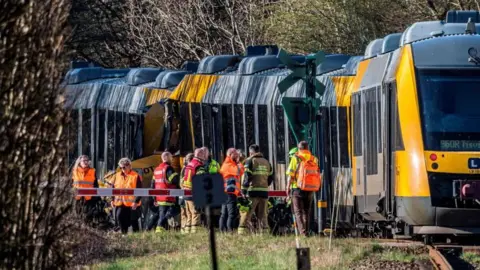
Alberto Montavez Montes, a shop-owner near Córdoba city hall, reflected on the sudden change in perceptions, stating, Since the high-speed line was built, we never had any problems, it worked perfectly and was fantastic. Now, though, it makes you just a bit reluctant to get on a train, without a doubt. In less than a week, two catastrophic events—a collision of two high-speed trains and a tragic accident involving a collapsed wall—have left Spain's once-revered rail system in turmoil, leading to a community in mourning.
Second only to China in high-speed rail metrics, Spain has historically showcased an efficient network spanning 3,900 kilometers. It gained international acclaim when former US President Barack Obama spotlighted the Madrid-Seville line's success in 2009. However, recent accidents have tarnished this reputation. The collision occurred last Sunday when an Iryo train derailed and crashed into an oncoming Renfe train, triggering nationwide fears over rail safety.
The series of accidents expanded recently, including a trainee driver's tragic death due to a falling wall near Barcelona after heavy rainfall, alongside other minor incidents causing injuries. Such events have led to safety strikes from train drivers in Catalonia and sparked calls for systemic changes amid increasing reports of maintenance concerns.
In response, the Spanish government continues to investigate the crashes while defending its investment in railway infrastructure, though public trust wanes as maintenance concerns surface. Visibility into the causes of these accidents is crucial, as initial findings suggest existing track fractures contributed to the derailment. As fears mount among the populace, questions about the true state of Spain's rail system, once a point of national pride, echo loudly in the corridors of politics and public discussion.