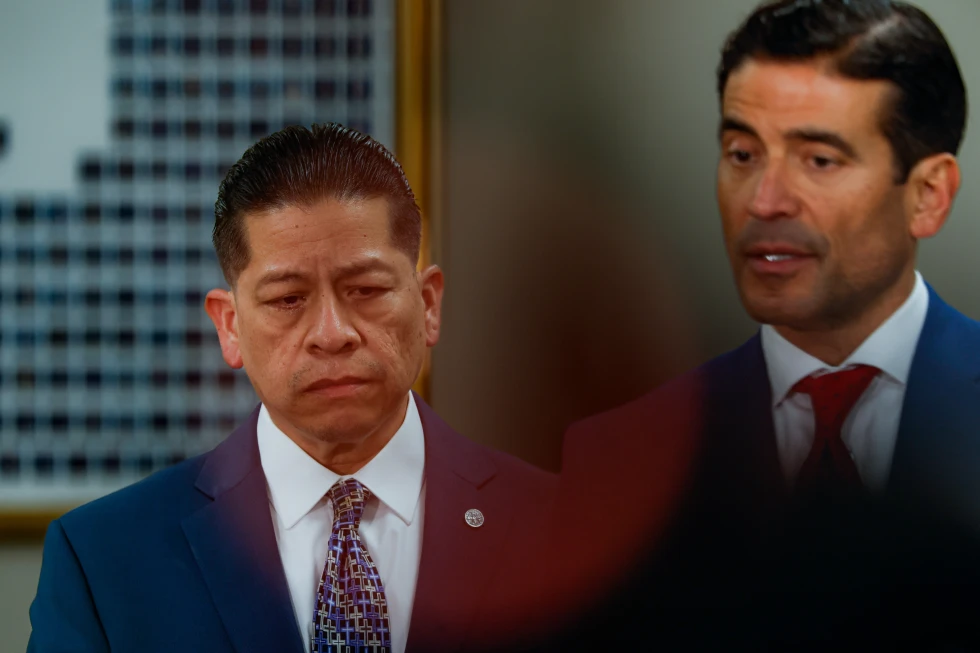
WASHINGTON (AP) — Senator Ted Cruz is urging the approval of restrictions on military flights to prevent a repeat of the midair collision that resulted in 67 fatalities earlier this year over Washington, D.C. Cruz, together with Democratic Senator Maria Cantwell, held a press conference alongside victims' family members to voice their opposition to provisions in a large defense authorization bill set for a vote this week.
The controversial provisions would grant military aircraft a waiver to omit broadcasting their precise locations, a practice that was in place before the tragic crash in January involving an airliner and an Army helicopter. Cruz and Cantwell are advocating for the removal of these provisions. However, altering the bill could delay significant pay raises for military personnel and hinder key legislative initiatives.
As a solution, Cruz has announced plans to push for the ROTOR Act, which stands for Rotorcraft Operations Transparency and Oversight Reform, as part of any funding package introduced in January. He stated, I'm seeking a vote on the ROTOR Act as part of any appropriations measure before the current continuing resolution expires at the end of next month. This act requires all aircraft to broadcast their geolocation data, aligning with safety measures supported by various stakeholders, including the White House.
Following the January collision, which raised alarms about air safety in the capital region, there has been widespread criticism from transportation safety advocates regarding the recent changes. The National Transportation Safety Board Chairwoman Jennifer Homendy has decried the lack of stricter safety regulations, stating that previous efforts to enhance aviation safety risk being compromised.
The defense bill's provisions are seen as a step backward, potentially reversing safety advancements made following past aviation recommendations. The same safety concerns highlight the need to require military helicopters to adhere to the same aviation safety standards as civilian aircraft, especially in crowded airspaces.
The families of victims from the January crash have expressed their distress, warning that relaxing the restrictions risks future tragedies. One family member, Amy Hunter, lamented the potential rollback of crucial progress made in aviation safety reforms. She stressed that the new provisions could significantly undermine airspace safety around major airports including Reagan National.
The bill Cruz and Cantwell proposed, which mandates that all aircraft, including military aircraft, publicly report their positions, is gaining traction among various transportation safety groups and officials. Senate Majority Leader John Thune expressed optimism about the ROTOR Act being included in the upcoming funding discussions, even as he acknowledged the complexities of modifying the defense authorization bill at this late stage.
This series of developments raises crucial questions about air traffic safety in high-density areas such as Washington, D.C., marking a significant moment in congressional debates on aviation regulations.