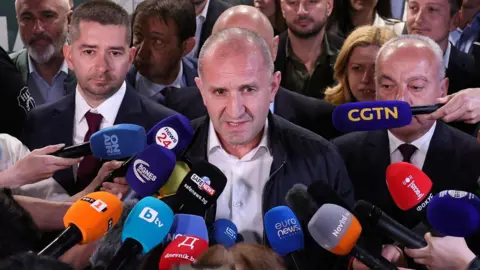
Rumen Radev's Progressive Bulgaria party looks set to win Sunday's Bulgarian Parliamentary election - the eighth general election in five years. Exit polls put his Progressive Bulgaria on 37%, more than double the score of the closest runner-up, former prime minister Boiko Borisov's GERB on 16%. Three or four other parties look set to cross the 4% threshold and enter Parliament.
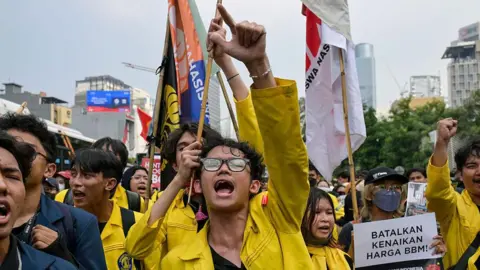
The election was called after the previous government tried to push through a controversial budget last December, prompting mass demonstrations which Radev, as president, supported. People rejected the self-satisfaction and arrogance of old parties and did not fall prey to lies and manipulation. I thank them for their trust, Radev said in his victory speech. He promised to build a strong Bulgaria in a strong Europe.
Radev highlighted the need for critical thinking, pragmatic actions, and good results in Europe, aiming to contribute significantly to the continent's security and industrial competitiveness. Seen as a pragmatic, somewhat pro-Russian leader, Radev has previously criticized EU sanctions, opposed military support for Ukraine, and focused on domestic policies such as combating corruption.
After stepping down from his presidential role in January to lead his new movement, Radev's impressive victory, significant by Bulgarian standards, does not provide Progressive Bulgaria a strong enough mandate to govern alone. In his first speech following the election, Radev mentioned seeking coalition partners.
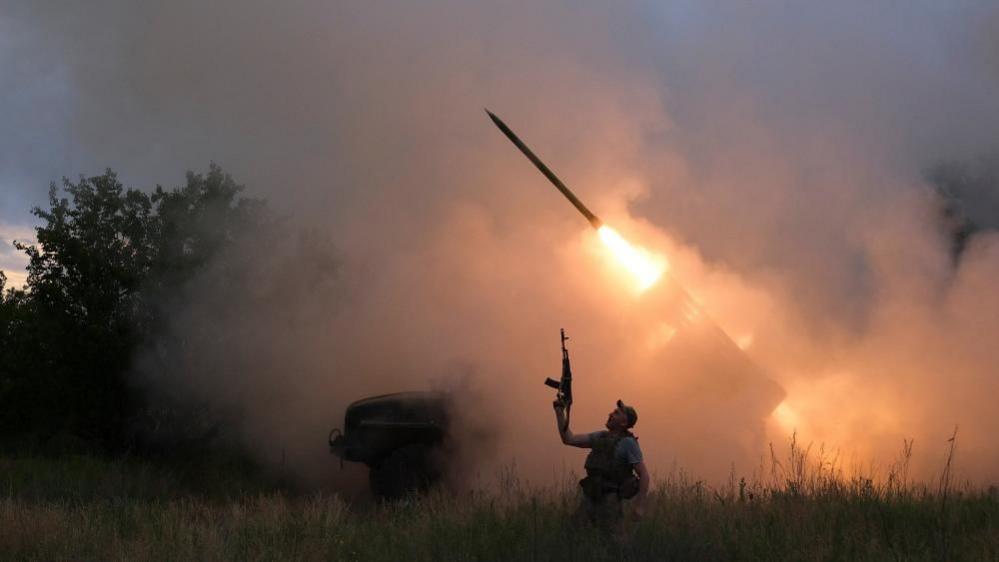
Bulgaria plays a crucial role in supplying ammunition and explosives to Ukraine through third countries, particularly Romania, and the war has revitalized its struggling arms industry. Radev has also contested the sale of Bulgarian arms stockpiles to Ukraine, arguing it prolongs an unwinnable conflict.
With recent developments in military production, including a €1 billion joint venture with the German company Rheinmetall, Bulgaria is increasingly integrating into the European defense ecosystem. As Radev assumes power, his approach mirrors that of other critical EU leaders, balancing national interests with regional security commitments.
The election was called after the previous government tried to push through a controversial budget last December, prompting mass demonstrations which Radev, as president, supported. People rejected the self-satisfaction and arrogance of old parties and did not fall prey to lies and manipulation. I thank them for their trust, Radev said in his victory speech. He promised to build a strong Bulgaria in a strong Europe.
Radev highlighted the need for critical thinking, pragmatic actions, and good results in Europe, aiming to contribute significantly to the continent's security and industrial competitiveness. Seen as a pragmatic, somewhat pro-Russian leader, Radev has previously criticized EU sanctions, opposed military support for Ukraine, and focused on domestic policies such as combating corruption.
After stepping down from his presidential role in January to lead his new movement, Radev's impressive victory, significant by Bulgarian standards, does not provide Progressive Bulgaria a strong enough mandate to govern alone. In his first speech following the election, Radev mentioned seeking coalition partners.
Bulgaria plays a crucial role in supplying ammunition and explosives to Ukraine through third countries, particularly Romania, and the war has revitalized its struggling arms industry. Radev has also contested the sale of Bulgarian arms stockpiles to Ukraine, arguing it prolongs an unwinnable conflict.
With recent developments in military production, including a €1 billion joint venture with the German company Rheinmetall, Bulgaria is increasingly integrating into the European defense ecosystem. As Radev assumes power, his approach mirrors that of other critical EU leaders, balancing national interests with regional security commitments.