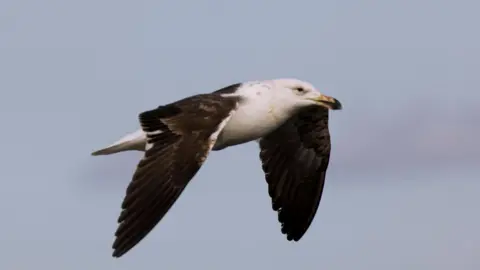
On a small boat in the Atlantic, about 27 nautical miles from Cape Point, bird watchers are thrilled to spot endangered species, including the black-browed albatross. This region is a hotspot for seabirds drawn to fishing trawlers, which inadvertently endanger their lives through bycatch.
The high seas pose significant risks for albatrosses, particularly due to a commercial fishing method using long lines with thousands of hooks that can drag birds underwater. These unfortunate incidents are often termed as bycatch, posing a grave threat to seabird populations, with albatrosses spending much of their lives at sea.
According to Andrea Angel from BirdLife South Africa, the situation is dire for seabirds, as 15 out of 22 albatross species globally are threatened by fishing. Albatross couples mate for life and raise only one chick every two years, which makes their extinction threats even more severe. The loss of one parent due to fishing activities can lead to the death of the chick, effectively eliminating years of reproductive effort.
BirdLife South Africa has been proactive in addressing this issue through the Albatross Task Force, which has successfully reduced seabird deaths by 90% since its inception in 2004. They advocate for the use of bird scaring lines—simple devices that deter birds from fishing lines—crafted by partnerships with local communities, including workers with disabilities.
Deborah Gonsalves, manager of the Ocean View Association for Persons with Disabilities, highlights the impact of this partnership, emphasizing the dual benefits of creating economic opportunities for disabled workers while also conserving wildlife. These colorful plastic streamers not only serve to scare birds away but also provide a sense of purpose and financial support for the workers involved.
While there is a positive trend in conservation efforts, challenges such as fishermen's reluctance to deploy the lines remain. Economic incentives for fishers underscore the importance of protecting albatrosses; a single tuna can be worth around $10,000, compared to negligible value for a bird.
The road ahead will require continued advocacy and collaboration to ensure that the black-browed albatross and other seabirds can thrive amid fishing activity off the coast of South Africa.