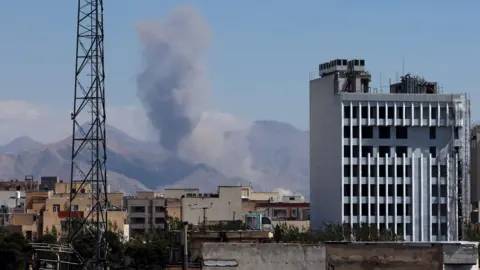
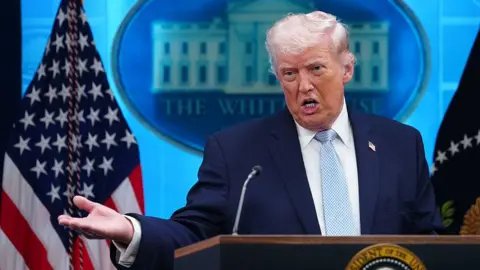
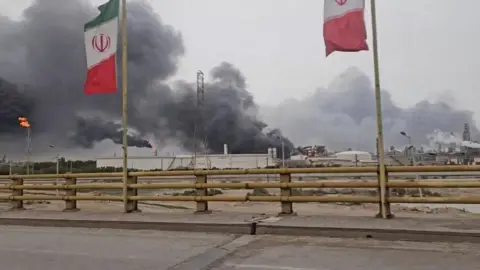
Global oil prices have fallen sharply since President Donald Trump announced a two-week ceasefire between the US and Iran if vessels are allowed to move through the key Strait of Hormuz waterway. The price of benchmark Brent crude fell about 15.9% to $92.30 (£68.87) a barrel, while US-traded oil was almost 16.5% lower at $93.80. But prices remain higher than before the conflict started on 28 February. The cost of energy has jumped as oil and gas supplies from the Middle East have been severely disrupted by Iranian threats to attack ships trying to use the strait in retaliation for US and Israeli airstrikes. In a social media post on Tuesday evening, Trump stated: 'I agree to suspend the bombing and attack of Iran for a period of two weeks... subject to the Islamic Republic of Iran agreeing to the COMPLETE, IMMEDIATE, and SAFE OPENING of the Strait of Hormuz'. He set a deadline for 20:00 EDT on Tuesday (00:00 GMT on Wednesday), threatening that 'a whole civilisation will die tonight' if no deal was reached. Despite his threats, Trump was likely to be wary about letting energy prices 'skyrocket' by escalating the conflict, said Xavier Smith from market research firm AlphaSense. This could have led to a 'self-inflicted economic wound' that few would risk, especially given the looming pressure of approval ratings on Trump's leadership.
Oil Prices Drop Following Trump's Conditional Ceasefire Agreement with Iran

Oil Prices Drop Following Trump's Conditional Ceasefire Agreement with Iran
In light of President Trump's announcement of a two-week ceasefire with Iran, global oil prices have witnessed a significant decline, though they remain elevated compared to pre-conflict levels.
President Trump's conditional ceasefire with Iran, aimed at allowing passage through the Strait of Hormuz, has led to a sharp drop in global oil prices—over 15% in some cases. Despite this decrease, prices are still higher than they were before the recent conflict began.