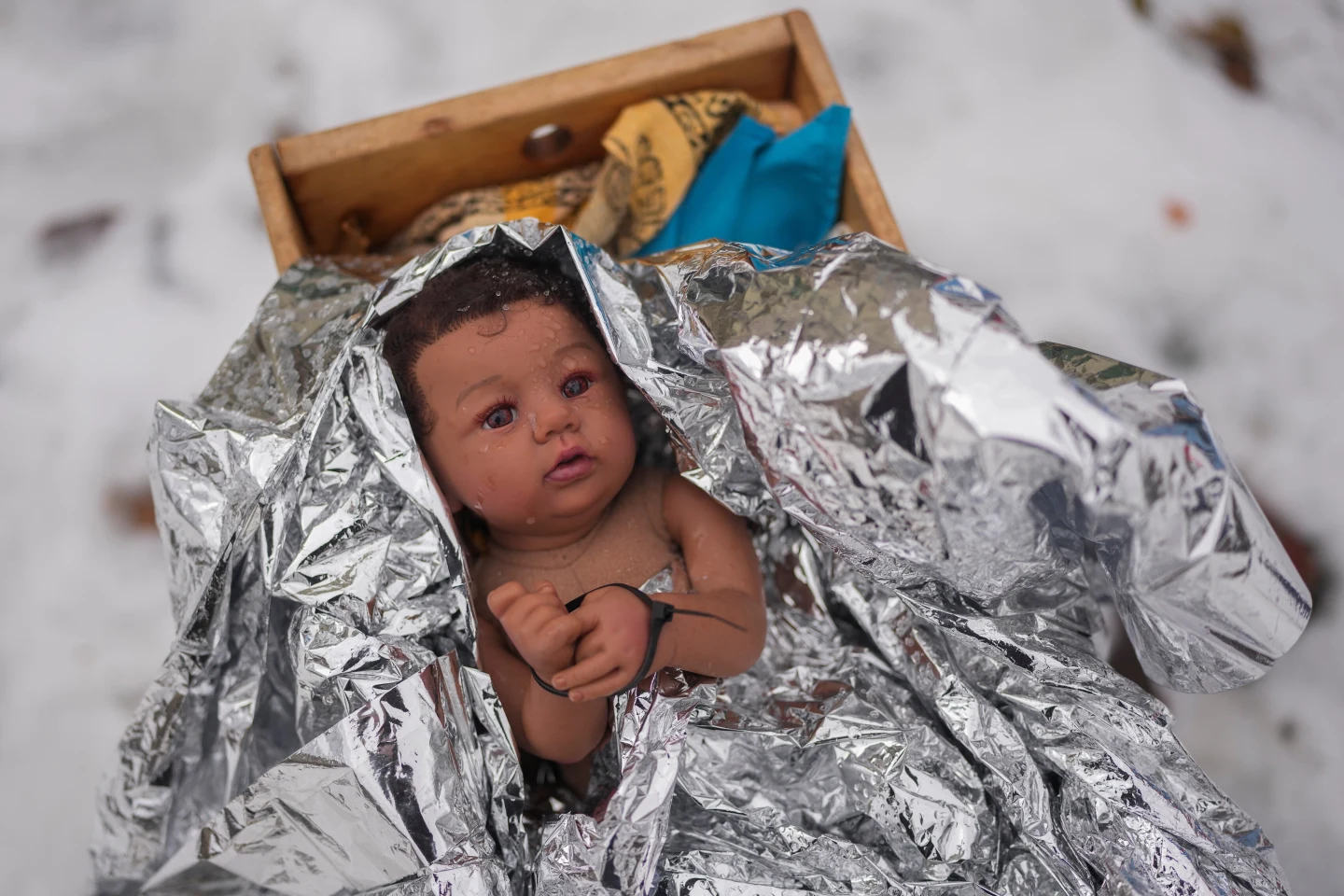
DEDHAM, Mass. (AP) — In an evocative display, one baby Jesus lies in a manger amidst the snow, wrapped in a silver emergency blanket with zip ties on his wrists. Nearby, Mary is depicted wearing a plastic gas mask while flanked by Roman soldiers labeled ICE. These artistic reimaginings of the nativity scene are taking place outside churches across the Chicago area, intended as a stark commentary on immigration policies under the current administration.
One sign outside the Urban Village Church articulates, Due to ICE activity in our community, the Holy Family is in hiding, emphasizing the fears many families face with regards to deportation and family separation. These modifications to the beloved Christmas story resonate deeply in communities where immigration enforcement has intensified, leading to increased anxiety among undocumented immigrants as well as legal residents.
While supporters argue that these displays reflect biblical lessons on empathy and compassion towards refugees, critics view them as sacrilegious, sparking a heated debate. Some believe churches should remain politically neutral, facing the possibility of losing tax-exempt status due to perceived violations of their mission. The Archdiocese of Massachusetts has mandated that a local nativity scene must be restored to its original state.
Rev. Michael Woolf from Lake Street Church expressed that this season offers a crucial opportunity for churches to use public displays to foster discussion and awareness regarding current social issues. Past interpretations have included Jesus depicted in rubble to represent peace appeals in Gaza and a previous display where the infant Jesus was locked in a cage to protest family separations.
Boston Archbishop Richard Henning has ordered the removal of the specific nativity installation, which has prompted some members to challenge the authority of the church hierarchy over how faith and contemporary social justice can intersect. C.J. Doyle, director of the Catholic Action League of Massachusetts, called recent displays a grave scandal for Catholicism and seeks consequences for the clergy involved.
Local responses have varied; while some parishioners view the reimagined nativity as a vital reflection of community struggles, others express concern that it distracts from genuine worship. Critically, reactions reveal a divide among the faithful regarding the role of the church in social and political discourse.