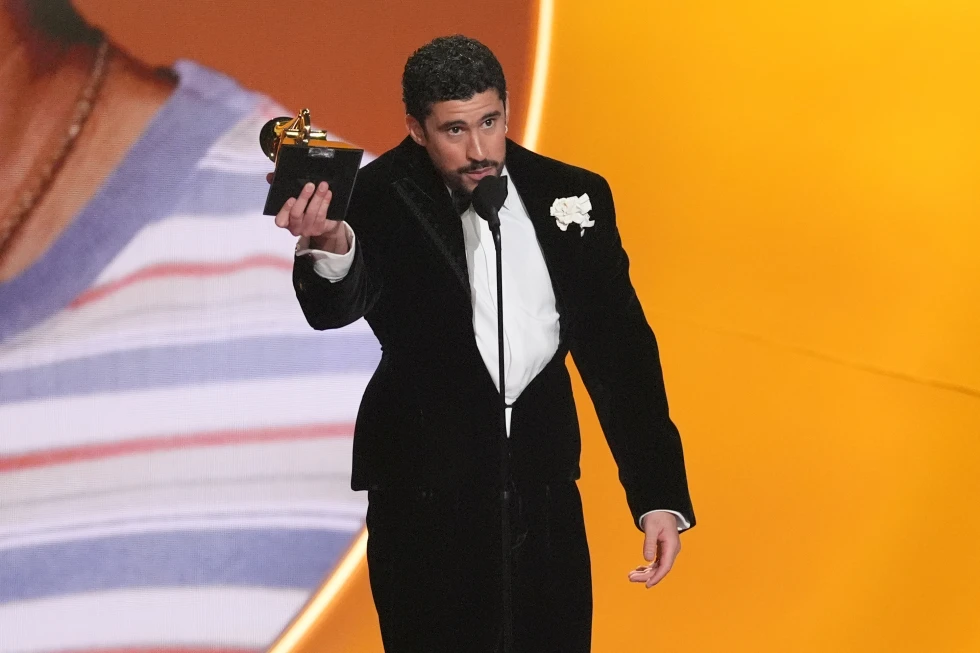
LOS ANGELES (RTW News) — The 2026 Grammy Awards showcased a landmark moment for the music industry as Bad Bunny’s 'Debí Tirar Más Fotos' took home the prestigious Album of the Year award on Sunday night. This win, seen as a victory for diversity and inclusion, came amidst a backdrop of politically charged speeches addressing immigration issues.
Historically, the Grammy Awards have faced criticism for a lack of representation, particularly for artists of color and those from various musical genres. However, recent years have seen a concerted effort by the Recording Academy to diversify its voting members. In 2025 alone, 3,800 new members were added, with significant representation of young people, artists of color, and women.
Bad Bunny's Trailblazing Success
Bad Bunny now joins the ranks of notable Latino winners such as Santana and João Gilberto. “There’s much incredible Latin music that has been overlooked, and that's why this win feels so significant,” commented Vanessa Díaz, author of 'P FKN R: How Bad Bunny Became the Global Voice of Puerto Rican Resistance.' With 'Debí Tirar Más Fotos' being the most-streamed release of 2025 globally, its artistic and commercial acclaim underscores a critical evolution within the industry.
The album serves as a bridge between Puerto Rican folklore and modern genres, illustrating a rich cultural tapestry. It not only speaks to Puerto Rican identity but also resonates with broader global struggles, showcasing how music can reflect complex societal issues.
A Platform for Advocacy
During the Grammy ceremony, a wave of anti-ICE sentiment washed over the stage as artists like Billie Eilish and Olivia Dean used their acceptance speeches to advocate for immigrant rights. Eilish's statement, “No one is illegal on stolen land,” resonated with many, highlighting the urgent need for dialogue on immigration in America.
Bad Bunny's own remarks, declaring “ICE out,” cemented his role not just as an artist but as a voice for those affected by immigration policies. His acknowledgment of Puerto Rico’s complex colonial status during the event further underscored the historical weight of his achievement.
Looking Forward
As Bad Bunny prepares to perform at the Super Bowl halftime show next week, a significant cultural milestone for Latino communities, his Grammy win comes at a time when many seek representation and recognition in public spaces. Bad Bunny's success embodies hope and determination for underrepresented communities, offering a sonic language to narrate the complexities of the present day.
The Grammy Awards in 2026 are not merely about music; they represent a cultural shift, a statement of solidarity, and an embrace of diversity that promises to inspire future generations.