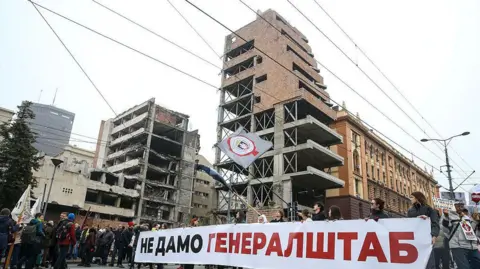
The Trump International Hotel proposed for the Serbian capital Belgrade was intended to signify a new chapter in the country's modern history, taking the place of the bomb-damaged Generalstab, a site considered a witness to the tumultuous past of the region. However, the project faced substantial obstacles as the Generalstab was officially recognized as a cultural heritage site.
The Serbian government attempted to circumvent this by removing the site's protection status. This move is now under scrutiny, with Culture Minister Nikola Selakovic currently on trial for alleged abuse of office aimed at influencing the removal of this designation. Prosecutors are pushing for a three-year prison sentence. In a surprising political twist, President Aleksandar Vucic vowed to pardon Selakovic if convicted, complicating the political landscape further.
With such controversies surrounding the legality of the project, it seems increasingly unlikely that the planned hotel will ever materialize.
The proposal was already contentious given historical tensions between Serbia and the United States, exacerbated by NATO airstrikes in 1999 that resulted in extensive damage to Belgrade. The government's collaboration with Jared Kushner, former President Donald Trump's son-in-law, was initially received with surprise, quickly spiraling into public outrage when the Trump branded hotel proposal was announced.
The backlash was widespread among Serbians who see the site as a memorial and a significant part of their historical narrative. Opposition groups have formed, made up of architects, military veterans, and student activists, drawing attention to the lack of a tender process for the deal. Protests have resumed outside the courts amid ongoing legal battles concerning the allegations against government officials involved in the project.
Ultimately, amidst the swirling controversy, Kushner's company announced a retreat from the Belgrade hotel initiative, signalling a shift in focus towards new developments in Albania. The future of business interest in Serbia remains murky, with the son-in-law of the former US president moving towards potential new ventures while local sentiments remain highly charged.
The Serbian government attempted to circumvent this by removing the site's protection status. This move is now under scrutiny, with Culture Minister Nikola Selakovic currently on trial for alleged abuse of office aimed at influencing the removal of this designation. Prosecutors are pushing for a three-year prison sentence. In a surprising political twist, President Aleksandar Vucic vowed to pardon Selakovic if convicted, complicating the political landscape further.
With such controversies surrounding the legality of the project, it seems increasingly unlikely that the planned hotel will ever materialize.
The proposal was already contentious given historical tensions between Serbia and the United States, exacerbated by NATO airstrikes in 1999 that resulted in extensive damage to Belgrade. The government's collaboration with Jared Kushner, former President Donald Trump's son-in-law, was initially received with surprise, quickly spiraling into public outrage when the Trump branded hotel proposal was announced.
The backlash was widespread among Serbians who see the site as a memorial and a significant part of their historical narrative. Opposition groups have formed, made up of architects, military veterans, and student activists, drawing attention to the lack of a tender process for the deal. Protests have resumed outside the courts amid ongoing legal battles concerning the allegations against government officials involved in the project.
Ultimately, amidst the swirling controversy, Kushner's company announced a retreat from the Belgrade hotel initiative, signalling a shift in focus towards new developments in Albania. The future of business interest in Serbia remains murky, with the son-in-law of the former US president moving towards potential new ventures while local sentiments remain highly charged.