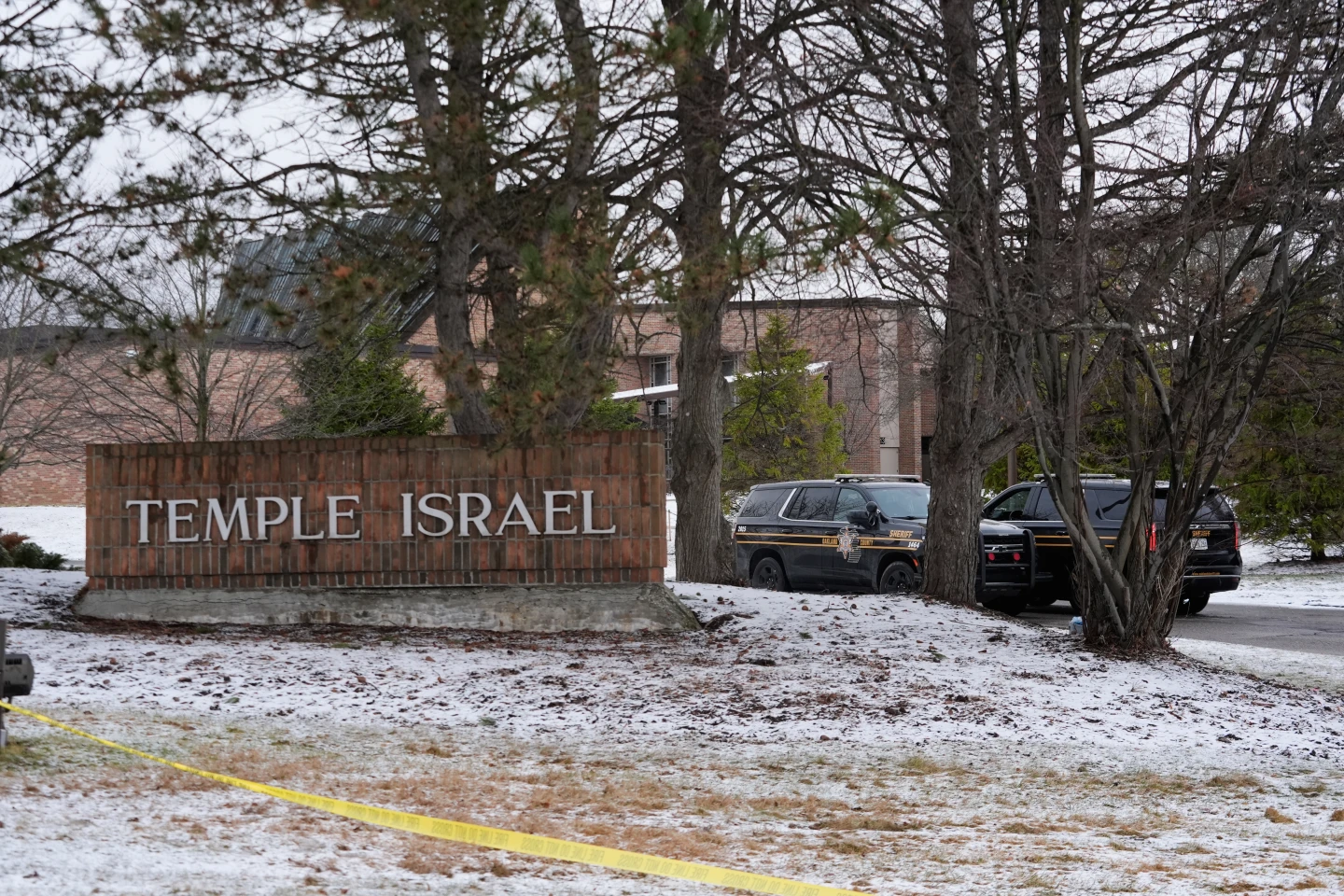
PONTIAC, Mich. (AP) — In a bid to reclaim their narrative and share the true extent of the damage sustained during a harrowing attack, Temple Israel in Pontiac, Michigan, posted several distressing photos on social media on Thursday. The images depict significant fire damage following a devastating incident that occurred last week when Ayman Ghazali drove his pickup truck into the synagogue, resulting in both physical destruction and untold emotional trauma.
One photo, particularly evocative, showcases untouched tables laden with fruits and snacks, a stark reminder of the normalcy that was shattered during the attack. Images reveal a troubling scene of exposed wires, a charred ceiling, and burnt photographs that once captured joyous moments within the sacred walls of the synagogue.
“We want to be the ones to tell our story,” Temple Israel stated on their Facebook page. The decision to share these photos followed media outlets circulating images that the synagogue felt were damaging to the survivors and the community.
The attack transpired on March 12, when Ghazali, after sitting in his vehicle for two hours in the synagogue’s parking lot, crashed through a door, injuring a security guard. The subsequent chaos involved an exchange of gunfire with security personnel before Ghazali took his own life. The FBI reported that there were no injuries among children or staff present during the attack.
While the FBI continues to investigate the motives behind Ghazali's actions—following warnings from his ex-wife indicating his distress following recent family losses—his tragic act has left a profound impact on the community. It raises serious questions about mental health and the importance of community support in the aftermath of such shocking incidents.
One photo, particularly evocative, showcases untouched tables laden with fruits and snacks, a stark reminder of the normalcy that was shattered during the attack. Images reveal a troubling scene of exposed wires, a charred ceiling, and burnt photographs that once captured joyous moments within the sacred walls of the synagogue.
“We want to be the ones to tell our story,” Temple Israel stated on their Facebook page. The decision to share these photos followed media outlets circulating images that the synagogue felt were damaging to the survivors and the community.
The attack transpired on March 12, when Ghazali, after sitting in his vehicle for two hours in the synagogue’s parking lot, crashed through a door, injuring a security guard. The subsequent chaos involved an exchange of gunfire with security personnel before Ghazali took his own life. The FBI reported that there were no injuries among children or staff present during the attack.
While the FBI continues to investigate the motives behind Ghazali's actions—following warnings from his ex-wife indicating his distress following recent family losses—his tragic act has left a profound impact on the community. It raises serious questions about mental health and the importance of community support in the aftermath of such shocking incidents.