In brief
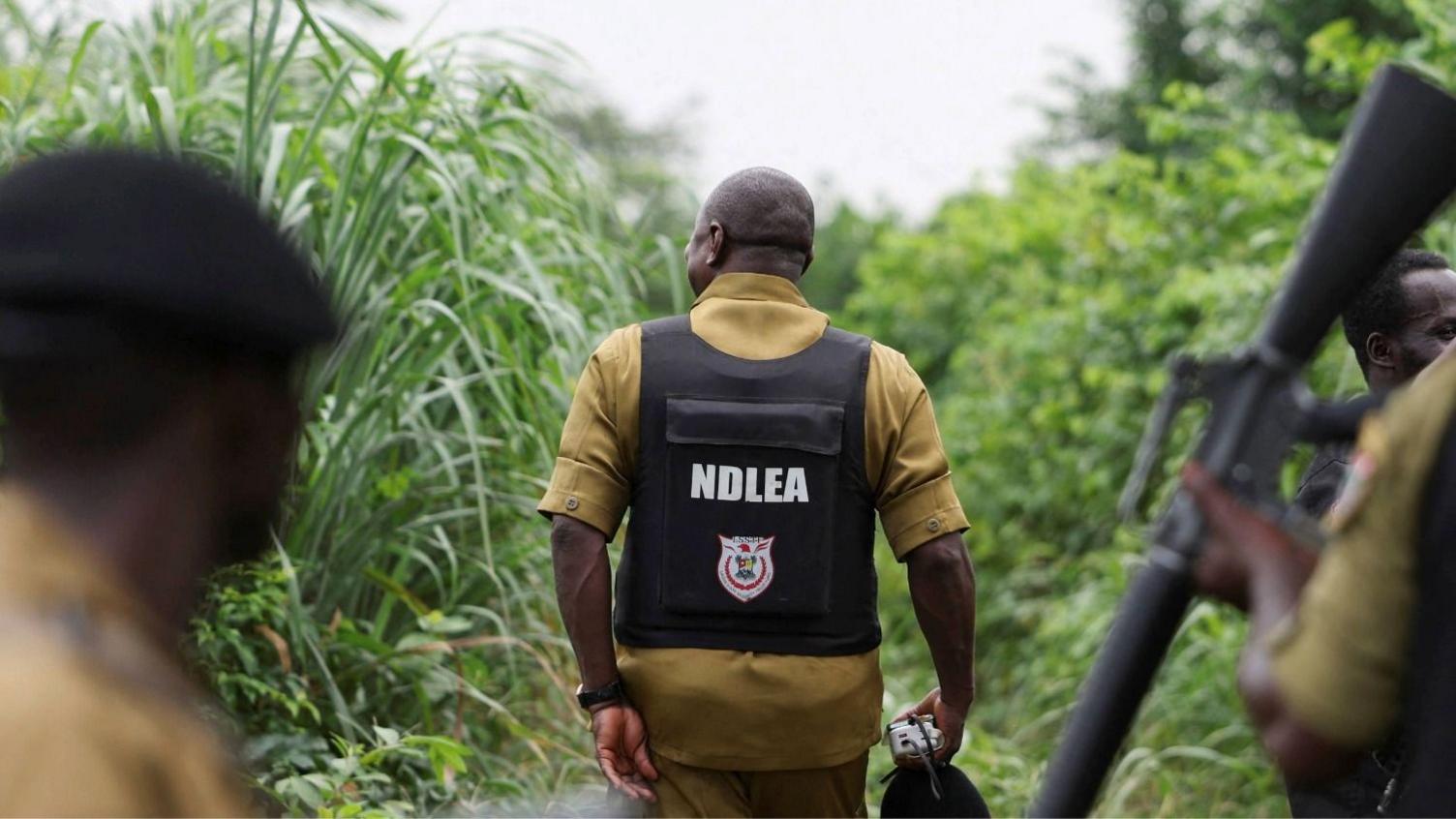
Mexican drug syndicates have moved their methamphetamine production out of the Americas and into West Africa, turning remote Nigerian forests into secret laboratories. A federal court convened inside one such site, impressively pairing legal protocol with the smell of chemicals. The National Drug Law Enforcement Agency said it seized more than two tonnes of meth worth $360 million in the largest bust so far. Experts warn that the synthetic drug’s ease of manufacture fuels a growing crisis across the continent and beyond, and that Africa’s location provides easy shipping routes to Europe and Asia.
In a dramatic move for a federal court, Nigerian judge Justice Musa Kakaki sat in a crime scene that was very much not a courtroom but a clandestine methamphetamine laboratory deep inside Ogun state’s forest. The lawyers, dressed in formal suits, moved through a room that smelled of liquefied crystals and caustic chemicals, while handcuffed suspects marched side‑by‑side with their alleged evidence.
The operation, the National Drug Law Enforcement Agency (NDLEA) said, involved three Mexicans and seven Nigerians. On that day the court heard the names and saw the pumps, plastic buckets, propane cylinders and bags of soda lime that were used to synthesize the drug known locally as “ice.”
Since the raid in May, NDLEA has claimed the stream is “the largest‑ever meth bust” in the country – more than two tonnes of the drug, valued at roughly $360 million, seized from the site. “It was a highly sophisticated, multi‑million‑dollar operation,” the agency said.
What makes the operation bold is that the kits and chemicals used are imported from Mexico’s densest outposts, the Sinaloa and Jalisco New Generation cartels. The chemists, known locally as “cooks,” have set up production facilities in forested enclaves that are readily hidden from the public and sequestered from the area’s notorious bandit activity.
The growing presence of these labs is part of a larger pattern. In 2023, the NDLEA identified 14 Mexican‑run labs across the continent, with 10 in Nigeria alone a year later. “The geography provides seclusion, easy import of chemicals and cheap labour from the region’s huge youth population,” said Femi Babafemi, NDLEA spokesperson, recalling that a 2018 survey had already placed Nigeria’s illicit drug use at 14.4 % of adults.
Synthetic drugs differ from cocaine or heroin in that they need no specific plant or animal, only chemicals and expertise – meaning that cartels can produce them anywhere. This has turned West Africa into a strategic base for cartels that want to feed markets in the Americas, Europe, Asia and the Caribbean. Us‑AFRICOM’s Gen Dagvin Anderson warned in 2025 that “militant groups are increasingly funded by cartel profits.”
The court‑in‑the‑lab session was as much a symbolic gesture as a practical one. Authorities told reporters that the temporary courtroom would “help us stay vigilant and be proactive.” They argued that stopping these operations in Nigeria would stop the drug from spilling into local communities and beyond.
A June raid in neighboring Oyo State and further seizures in Mozambique and South Africa indicate that the operational trend is moving beyond Ogun. Each discovery has brought back a set of hardened US‑AFRICOM intelligence, confirming the involvement of Mexico’s two biggest cartels and the spread of “high‑purity, high‑potency” meth that has now become a staple of overdose tragedies worldwide.
For now, the pressing question is whether the Nigerian judiciary and security forces can keep pace with the cartels’ rapid global spread. The country’s latest move to hold a court hearing inside a drug laboratory signals an intent to fight back—yet the costs of the illicit trade and the brain‑washing impact on vulnerable populations warn that the battle is far from over.