Massive Aftershocks Shake Southern Philippines as Death Toll Rises
A 7.8‑meter earthquake hit the southern Philippines on Monday morning, leaving dozens dead and hundreds injured. Hundreds of aftershocks have continued to shake Mindanao, raising fears that the death toll will rise further.
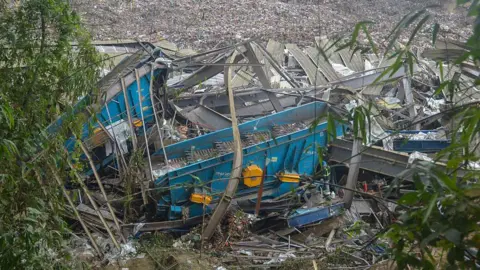
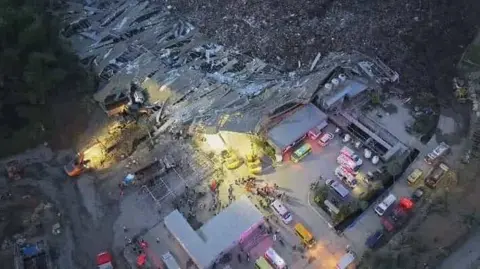
Emergency responders are encountering an unprecedented level of destruction: collapsed houses, cracked roads, and landslides that have buried entire highways. In many towns, electricity and telephone links are gone, making rescue work harder and slower.
The quake’s strength has also prompted tsunami warnings in Indonesia, the Philippines, and Japan’s Pacific coast, pushing thousands of residents onto higher ground and across nations into a state of alert.
“We hope the death toll does not increase further, but we are expecting it to move,” said Bernardo Alejandro, assistant secretary of the Disaster Risk Reduction and Management Office. “Our priority today is search and rescue.”
By midday, officials reported that roughly 2,000 homes and 6,000 public schools had suffered damage, according to early damage surveys.
The Philippines sits in the heart of the Pacific Ring of Fire, an area with some of the world’s highest seismic activity. The quake was generated by motion along the Cotabato Trench, a fault that has produced major quakes—including a 7.9‑meter event in 1976 that triggered a deadly tsunami.
In video footage, schoolchildren can be seen scrambling for safety during the tremors, while teachers reassure and calm them in what was described as a “rock‑on‑hammock” experience lasting over two minutes.
The fast‑food chain Jollibee suffered a visible collapse at a store in General Santos City, a scene that went viral on social media. The company confirmed that all its staff in affected areas were safe.
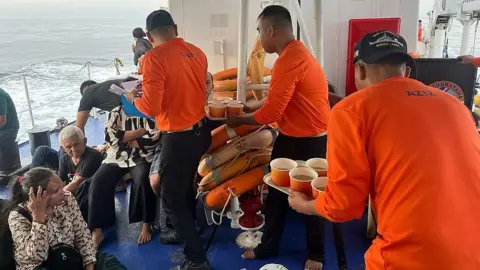
President Ferdinand Marcos Jr. declared that the government had mobilized all its resources to aid the affected communities. His transportation and health secretaries flew to Mindanao from Manila to oversee relief activities. Health Secretary Teodoro Herbosa noted that aftershocks continued to strike even as medical teams were treating injuries.
In some towns such as Jose Abad Santos in Davao Occidental, access remains difficult because landslides have buried roadways. Local officials said that relief supplies would need to be flown into remote barangays.
Key Takeaways – The southern Philippines is grappling with a major quake and ongoing aftershocks that are intensifying the humanitarian crisis, while authorities are working under challenging conditions to deliver aid, coordinate rescue, and restore basic services.