In brief
A quadcopter loaded with explosives was discovered on the tarmac at Leipzig/Halle Airport, forcing a runway lockdown and triggering a robot‑powered bomb disposal operation. German officials warn of a new level of danger and hint that foreign powers could be involved, yet no direct proof linking the device to Russia has emerged. Investigators are tracing the drone’s origins to a 2024 plot that involved Russian‑backed proxies, who smuggled explosives and drone parts across Europe. The incident echoes broader concerns about hybrid warfare tactics that threaten infrastructure and seek to sow fear among allies.
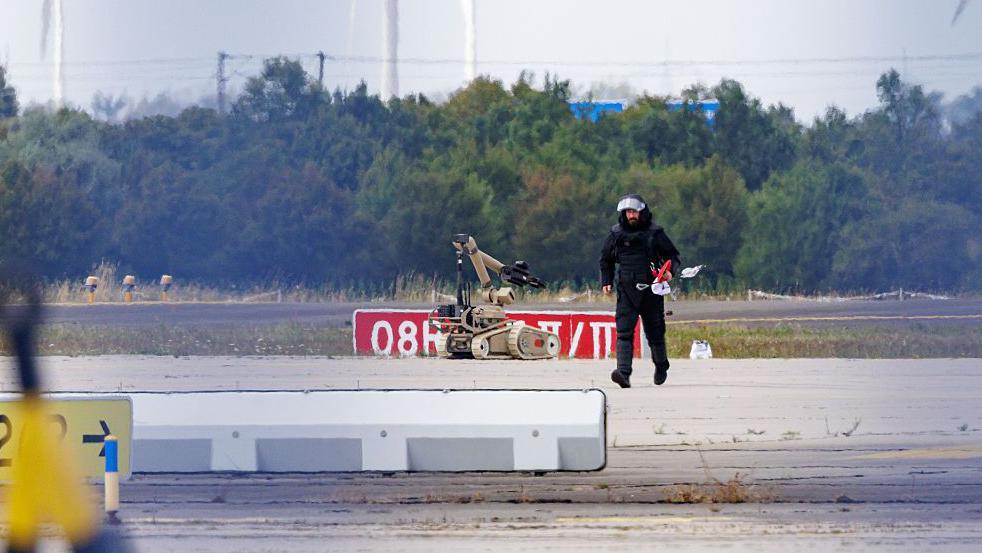
German civil aviation authorities have confirmed that a small quadcopter carrying explosives was recovered from the runway at Leipzig/Halle Airport on Tuesday night. The device prompted a temporary closure of the runway and sent a robot onto the tarmac to detonate the bomb safely.
The machine, which appeared to be hovering amid a cluster of Ukrainian Antonov cargo planes, was reported by German police as a “flying bomb.” It may contain Semtex, a plastic explosive used in a wide array of weapons, and the authorities are unclear on the exact weight of the payload.
Interior Minister Robert Habeck has warned that a new level of danger has been introduced by a potential foreign attack, offering no concrete evidence that the drone was linked to Russia. However, Russia has denied any role, while experts note that Moscow could have a motive to target European infrastructure in retaliation for Ukraine’s military advances.
Previous Russian‑Supported Plot May Hold Clues
In 2024, a parcel containing a sophisticated incendiary device caught fire at a DHL hub in Leipzig, shortly before it was loaded onto a flight. Similar incidents took place in Poland and the UK, prompting investigations into a network that authorities allege was recruited by Russian military intelligence.
Suspects in Lithuania and Poland are on trial for handling stolen explosives that were concealed in ordinary household goods, such as sweetcorn cans and headphones. The indictment claims that the devices were transported across borders from the Russian exclave of Kaliningrad and that drone parts—small plastic propellers and other components—were included.
Suspect Vladyslav D. Gives Details of Operations
Ukrainian national Vladyslav D., one of the accused in the Polish case, has testified that he carried out several trips across Lithuania and central Poland after instructions from a contact who used the nickname “Warrior.” He was paid more than $2,000 in cryptocurrency for transporting drone parts and “ten packs of headphones” that secretly housed the explosives.
Authorities say Vladyslav received orders to conceal the equipment in public places such as a cemetery and a hostel room in Düsseldorf, but the intended targets were never disclosed.
Moscow’s Possible Motive
Experts argue that if Russia infiltrated the Leipzig incident, its aim would be primarily psychological, sowing fear among Germany’s allies. Germany supplies significant military aid to Ukraine, and a successful drone bomb at a key European airport could be perceived as a warning from Moscow that further disruptions are possible.
International Reactions
While NATO acknowledged the incident, officials declined to confirm whether it involved interference from Russian forces. Antonov Airlines—tied to Ukrainian logistics—remains cautious about the ramifications of this event. A spokesperson for Kyiv’s security ministry emphasized that they had no basis to claim the Ukrainian planes were the intended target.
Analysts warn that such hybrid attacks could increase as Ukraine’s tactics shift the balance of the conflict, potentially escalating the threat to European infrastructure and prompting further security measures by the German state.