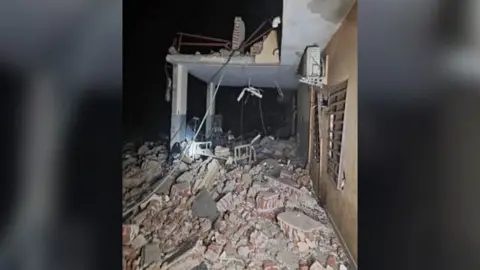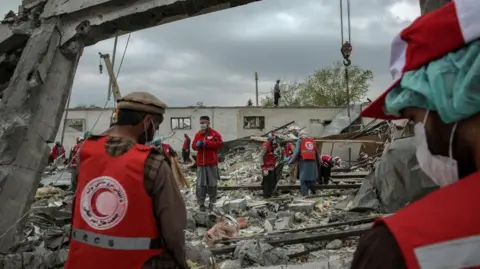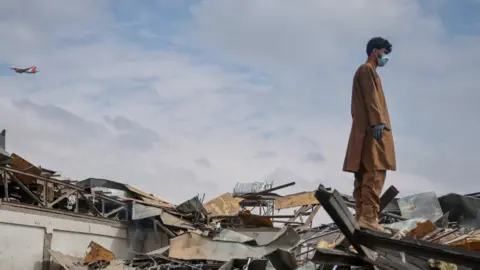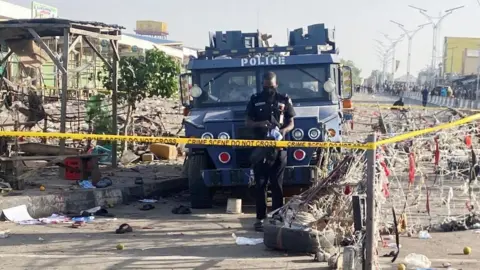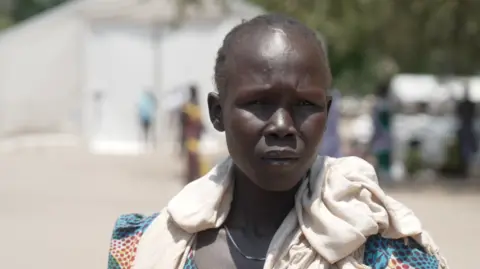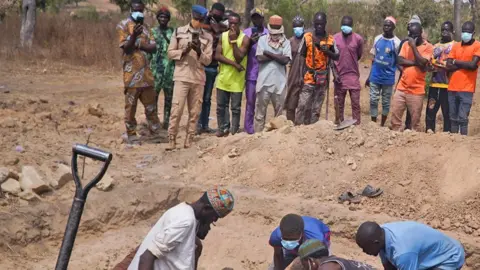
More than 100 armed jihadists dressed in army fatigues rode into the neighbouring Muslim villages of Woro and Nuku in Nigeria's western state of Kwara on motorbikes - driven by revenge.
They came en masse in the name of religion, and they decided to kill our people, Abdulla Umar Usman, a former teacher and resident of Woro, told the BBC, explaining how the attack, in which at least 75 people are so far known to have been killed, unfolded.
The mayhem started an hour before sunset on Tuesday as residents of the farming community were heading home from their fields, where they grow yams, maize, and millet.
The militants targeted the home of traditional leader Umar Bio Salihu, having previously sent him a letter asking if they could come and preach an extremist version of Islam, which the community did not welcome.
Salihu was not at home when they arrived, so the assailants set his compound alight, killing two of his children. Two of the community head's children, who were medical students, were killed in front of the house before they set it ablaze, Usman stated.
The jihadists then went on a killing spree that lasted all night, with local officials reporting, They massacred everyone. It is just devastating. Amnesty International reported that many victims had been found with their hands and feet tied, some with their throats slit, others shot dead.
When the jihadists left in the morning, they kidnapped 38 women and children, including Salihu's remaining family members. They killed two of my children and abducted my wife and three children, Salihu stated.
The attackers aimed to impose a parallel system of governance, rejecting the authority of the Nigerian government—an act that Salihu deemed as against what the Quran teaches.
The Nigerian government has attributed the attack to the Boko Haram jihadist group; however, Boko Haram has not released a statement regarding it. While Boko Haram has been operating in Nigeria’s northeast, a faction has been active in rural Kwara and the surrounding Niger state.
For five months, local communities had been receiving pamphlets soliciting their alignment with the militants. The violence followed warnings issued by the jihadists, corroborated by accounts of local MP Saidu Baba Ahmed, who noted that Salihu had reported the threats to security forces.
After an initial military investigation, the forces left, paving the way for the jihadists to launch their attack. Amnesty International expressed this as a significant security failure, questioning why preventative measures were not enacted after receiving prior warnings.
As the community begins to recover from this calamity, the emotional and physical scars left on Woro and Nuku resonate deeply among residents, with fellowship and rebuilding efforts trailing in the wake of this tragic massacre.