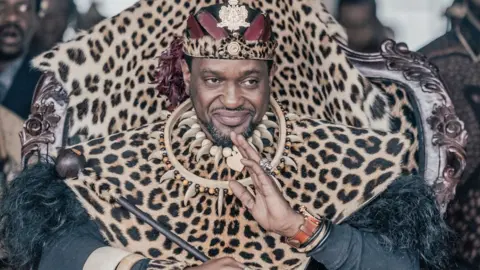
South Africa's Zulu king has raised eyebrows by using a highly derogatory term for foreigners and saying they must all leave the country during a much-hyped speech that was supposed to have been aimed at calming anti-migrant feelings in his home province of KwaZulu-Natal.
Warning: This story contains language some people may find offensive
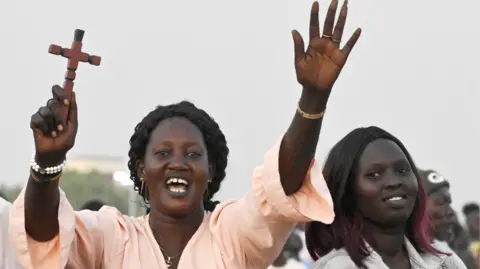
Misuzulu kaZwelithini was addressing his supporters at the place where 20,000 Zulu warriors defeated a British contingent of 1,800 soldiers 147 years ago beneath the rocky outcrop of Isandlwana hill. The Battle of Isandlwana, fought during the Anglo-Zulu war, is something many Zulus wear like a badge of honour: they fought against a foreign army and won. The ire of many of King Misuzulu's subjects is now directed not at British invaders but at migrants from neighbouring countries like Lesotho, Mozambique, and Zimbabwe who have come to South Africa to work.
According to official statistics, the country is home to about 2.4 million migrants, about 4% of the population. The 51-year-old monarch did not advocate violence but stated that all kwerekwere—an offensive term for African migrants—must pack their bags, even if they were in relationships with South Africans and had children with them.
We must now sit down and discuss this because even if my nephew's father is a 'kwerekwere', the 'kwerekwere' must leave, only the child will remain, he said on Thursday to the delight of his audience, who responded with laughter.
Online criticism has highlighted the hypocrisy of his comments, given that his own mother was from Eswatini, and one of his wives is from the neighbouring kingdom. Yet, xenophobic attitudes have long been an issue in South Africa, prompting deadly violence against migrants. His comments echo those made by his late father Goodwill Zwelithini, who urged migrants in 2015 to pack their belongings.
More than a decade later, xenophobia and anger directed at migrants remain a key political issue, with many believing that foreigners are stealing jobs and benefiting from public services. Joblessness in South Africa is staggering, standing at around 33%.
This sentiment has given rise to opposition parties with populist policies that support the expulsion of undocumented migrants. Vigilante groups like Operation Dudula have become notorious for their demands that foreign nationals be removed.
Recent protests against a primary school in KwaZulu-Natal claimed 90% of its students were children of migrants, leading to safety concerns that forced the school to send children home. Local officials disputed this claim and stated that only 37% of learners are children of immigrants, illustrating the misinformation at play.
The monarch has no formal political power, but a fifth of South Africa’s population is Zulu, and he holds significant sway in KwaZulu-Natal. The implications of his statements are troubling, as they may embolden anti-migrant sentiments and actions among ordinary citizens, warned experts.
Amidst calls for addressing these concerns, he also suggested renaming KwaZulu-Natal by removing Natal, a name he believes represents colonial history. This echoes desires held by his father and reflects ongoing discussions about identity and history in a multicultural nation.
The calls for exclusion based on heritage indicate a complex and volatile landscape in South Africa, where identity politics often intersect with economic hardship and social stability.