In brief
At VivaTech in Paris, Amazon founder Jeff Bezos cautioned that artificial intelligence will generate more employment opportunities instead of making people redundant, citing the need for human labour to harness AI’s potential. He championed his new AI venture Prometheus, focused on rapid physical manufacturing, and stressed the human‑centered aspect of technology. Bezos also shared a vision for a permanent lunar presence to support space exploration, while Blue Origin endured a rocket test failure, yet plans to resume launches quickly. The expo showcased advanced robotics, reflecting a shift of AI from chatbots to the tangible world.
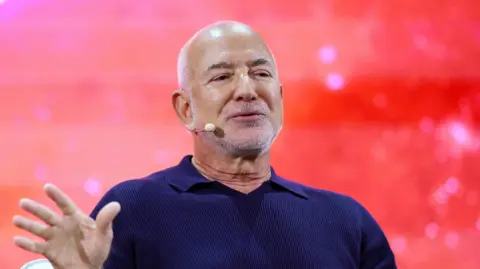
During his keynote at Europe’s leading technology conference, VivaTech, Amazon founder Jeff Bezos issued a reassuring message about the future of employment in the age of artificial intelligence. “I totally disagree with the idea that AI will make humans redundant,” he said, arguing that the new technology will unlock opportunities that require more human labour.
Bezos illustrated his points by discussing Prometheus, his recent AI venture focused on accelerating physical manufacturing—an industry that is becoming progressively automated. He believes that AI, if applied responsibly, can transform productivity and lead to a sustainable increase in job demand.
Moving beyond the office, Bezos shared his vision for space. He called the Moon “a natural starting point for humanity’s expansion beyond Earth” and said that lunar resources could eventually fuel rockets and sustain a permanent presence. The emphasis was on overcoming the supply constraints that currently limit space development.
The talk also touched on Blue Origin’s recent setback, when an uncrewed New Glenn rocket exploded during a ground test at Cape Canaveral. Bezos noted that the incident was a “gut punch” for the team but highlighted lessons learned, and Blue Origin’s chief executive Dave Limp confirmed that reconstruction is underway with a goal to resume launches by year‑end.
Highlighting the conference’s tech showcase, the automation of physical robots was a standout. A humanoid robot from Unitree attracted crowds as it demonstrated cognitive‑based commands using an electroencephalogram headband, illustrating the future of human‑robot collaboration in sectors ranging from manufacturing to healthcare.
The blend of AI, robotics and space exploration at VivaTech signals a broader industry shift: as technology moves from virtual chatbots into tangible, real‑world applications, the promise of new jobs and innovative solutions grows. Bezos’ optimism underscores the potential for a future where humans and machines work side‑by‑side, driving economic and cultural advancement.