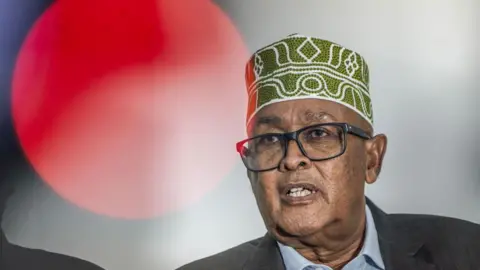
Israel has become the first country to formally recognize Somalia's breakaway region of Somaliland as an independent nation. Prime Minister Benjamin Netanyahu announced that Israel intends to immediately expand cooperation in agriculture, health, and technology. Somaliland's president, Abdirahman Mohamed Abdullahi, called the development 'a historic moment'.
The recognition could encourage other nations to follow suit, enhancing Somaliland's diplomatic standing and access to international markets. However, the announcement has faced backlash from the foreign ministers of Somalia, Egypt, Turkey, and Djibouti, who collectively expressed their 'total rejection' of Israel's declaration.
Abdullahi responded that Somaliland would join the Abraham Accords, viewing this as a step towards greater regional and global peace. He emphasized Somaliland's commitment to building partnerships and promoting stability in the Middle East and Africa.
Israel and Somaliland have agreed to establish full diplomatic ties, including the appointment of ambassadors and the opening of embassies. Israeli Foreign Minister Gideon Saar stated that he instructed his ministry to take immediate steps to institutionalize ties across various fields.
In light of Israel's recognition of Somaliland, Egypt's foreign minister has held discussions with counterparts in Somalia, Turkey, and Djibouti to address the implications of Israel's announcement. They reaffirmed support for Somalia's sovereignty and warned against unilateral actions that might destabilize the region.
Historical efforts by Israel to strengthen relations with countries in the Middle East and Africa have faced obstacles due to recent conflicts, including in Gaza and against Iran. The self-proclaimed republic of Somaliland has been striving for international recognition since its declaration of independence in 1991, following a lengthy war against Somalia's previous dictatorship.
With its strategic location on the Gulf of Aden and a population nearing six million, Somaliland has been at the center of various regional dynamics, including disputes with Somalia and developments involving Ethiopia and Egypt.
The recognition could encourage other nations to follow suit, enhancing Somaliland's diplomatic standing and access to international markets. However, the announcement has faced backlash from the foreign ministers of Somalia, Egypt, Turkey, and Djibouti, who collectively expressed their 'total rejection' of Israel's declaration.
Abdullahi responded that Somaliland would join the Abraham Accords, viewing this as a step towards greater regional and global peace. He emphasized Somaliland's commitment to building partnerships and promoting stability in the Middle East and Africa.
Israel and Somaliland have agreed to establish full diplomatic ties, including the appointment of ambassadors and the opening of embassies. Israeli Foreign Minister Gideon Saar stated that he instructed his ministry to take immediate steps to institutionalize ties across various fields.
In light of Israel's recognition of Somaliland, Egypt's foreign minister has held discussions with counterparts in Somalia, Turkey, and Djibouti to address the implications of Israel's announcement. They reaffirmed support for Somalia's sovereignty and warned against unilateral actions that might destabilize the region.
Historical efforts by Israel to strengthen relations with countries in the Middle East and Africa have faced obstacles due to recent conflicts, including in Gaza and against Iran. The self-proclaimed republic of Somaliland has been striving for international recognition since its declaration of independence in 1991, following a lengthy war against Somalia's previous dictatorship.
With its strategic location on the Gulf of Aden and a population nearing six million, Somaliland has been at the center of various regional dynamics, including disputes with Somalia and developments involving Ethiopia and Egypt.