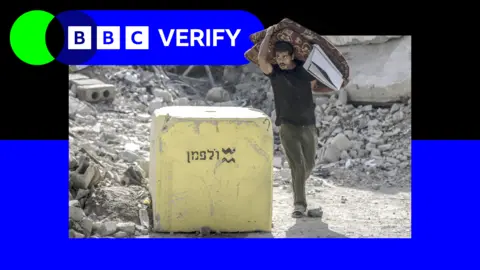
Israel has moved the blocks which are supposed to mark its post-ceasefire line of control deeper into Gaza in several places, sowing confusion among Palestinians.
Satellite images reviewed by BBC Verify show that in at least three areas Israel placed blocks, before returning later and moving the positions further into the Strip.
Under the terms of the US-brokered deal with Hamas, Israel agreed to withdraw troops beyond a line marked in yellow on Israeli military maps, which it has illustrated on the ground with concrete yellow blocks.
Defence Minister Israel Katz warned in October that anyone crossing the Yellow Line would be met with fire.
Since these comments were made, there have been a series of deadly incidents around the line.
In Beit Lahia, Jabalia and al-Tuffah, the Israel Defense Forces (IDF) placed blocks and later returned to move them deeper inside Gaza. In total, 16 positions were moved.
In the al-Tuffah neighbourhood of Gaza City, satellite images show that IDF troops moved at least seven already placed blocks between 27 November and 25 December.
The position of the markers was moved on average 295m (968ft) deeper inside the Strip.
As well as the blocks that have been moved, BBC Verify mapped 205 other markers. More than half of those have been placed significantly deeper inside the Strip than the line marked on maps.
An IDF spokesperson said it rejected all claims that the Yellow Line has been moved or its crossing by IDF troops.
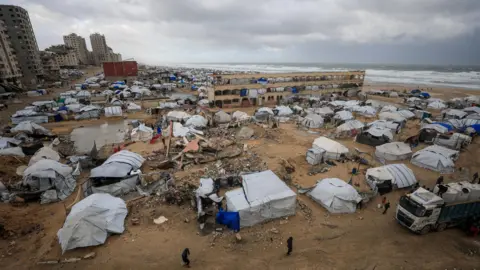
In analyses of satellite images up to 11 January, some sections of the Yellow Line - which the head of Israel's military described as a new border line - remain unmarked on the ground more than three months since the ceasefire began, leaving some people in Gaza unsure of the boundaries of this so-called dangerous combat zone.
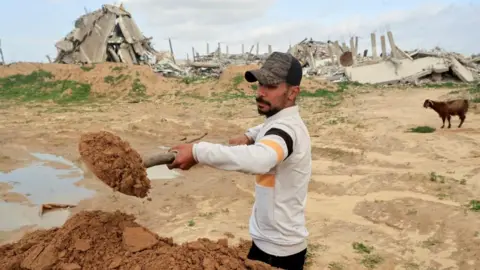
Last month, one 23-year-old man near Khan Younis - whom the BBC is not naming for his own safety - said Israeli troops suddenly moved blocks near him beyond the mapped line, leaving him trapped.
Dr. Andreas Krieg, a Middle East security expert, has characterized the movement of the blocks as a tool for territorial engineering, suggesting that by keeping the legal line on the map separated from the physical blocks, Israel can control Palestinian movement without formally declaring border changes.
Since Katz's warning, IDF troops reportedly shot at individuals crossing the Yellow Line on at least 69 occasions.
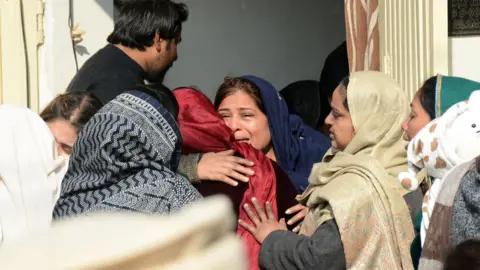
On 19 December, military action resulted in fatalities when the IDF struck a school sheltering displaced individuals within Palestinian territory yet near the moved markers, killing five, including children.
The movement of blocks has sparked concern internationally, with calls for clarity on the implications of Israeli actions in Gaza amidst ongoing conflict.