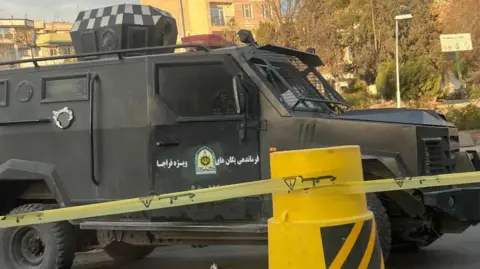
Iran is taking steps to prevent anti-establishment protests, with checkpoints appearing across the streets of the capital, internet access restricted, and mass text warnings sent to residents.
In Tehran, people have been telling the BBC about new security checkpoints around the city, where they say residents are stopped and searched.
They have told BBC Persian that some checkpoints are positioned under footbridges and inside road tunnels, after reports that several checkpoints in the middle of roads had been targeted by drone strikes.
A number of Iranian security personnel were killed in Israeli strikes on four checkpoints across Tehran, the hardline Fars News Agency reported on 11 March.
Fars said unofficial counts indicated that around 10 members of the security forces were killed in strikes in four districts of the capital.
Speaking to the BBC, a man in his twenties explained his strategy for getting through a checkpoint, where he said he was once stopped and his car was searched.
I started saying things like, 'Thanks for your hard work,' as if they were genuinely putting in a lot of effort and I appreciated it, he said.
Security forces let him go after the search.
I always wear colourful clothes. But now I don't, said a woman, also in her twenties. I'm scared of their patrols, worried that if I wear something too bright it might annoy them.
Restricted internet hinders coordination
Another man, also in his twenties, sells secure internet connections to some people, allowing them to bypass the government-imposed nationwide blackout.
It is still very difficult to contact those inside Iran during the internet outage that has been in place since the start of the war, but tech-savvy residents have been using SpaceX's Starlink devices and sharing their connection with others.
Restricting internet access not only restricts communication with the outside world, but also limits protesters' ability to mobilise, plan and communicate among each other. Encrypted messaging apps and platforms often function as tools for organising rallies, sharing protest locations, and circulating calls to action.
When these platforms are unavailable, coordination becomes far more difficult.
Iranian police have arrested a person in southern Fars Province over allegedly setting up a network to sell unfiltered internet via Starlink, according to a report by semi-official Mehr News Agency on 12 March.
Using Starlink in Iran carries a punishment of up to two years in prison and authorities have reportedly been searching for Starlink dishes to stop people from connecting to the internet.
Government spokesperson Fatemeh Mohajerani said on 10 March that the authorities were working to restore internet access for those who can broadcast the country's voice to the world.
So far, there have been no signs of the mass anti-establishment protests similar to those seen in January. The US-based Human Rights Activists News Agency (Hrana) said it had confirmed the killing of at least 7,000 civilians during January's protests.
Since the conflict began on 28 February, the authorities have organised pro‑establishment rallies and urged supporters to take to the streets to prevent what they describe as attempts to destabilise the country from within.