In brief
In a landmark move, India has initiated a cash transfer scheme that gives financial support to women, recognizing their unpaid domestic and care work. With millions of women benefiting from these transfers, the program aims to empower women economically and socially, although criticisms regarding its implications in politics and long-term empowerment remain. Researchers suggest that while beneficial, these programs must be paired with greater employment opportunities and recognition of women's contributions to household labor.
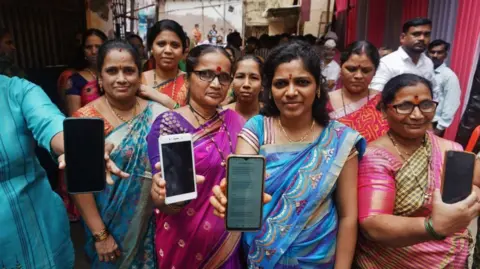
In a village in the central Indian state of Madhya Pradesh, a woman receives a small but steady sum each month - not wages, for she has no formal job, but an unconditional cash transfer from the government. Premila Bhalavi says the money covers medicines, vegetables and her son's school fees. The sum, 1,500 rupees ($16: £12), may be small, but its effect - predictable income, a sense of control and a taste of independence - is anything but. Her story is increasingly common as across India, 118 million adult women in 12 states now receive such transfers, making it one of the world’s largest social policy experiments. These women receive unconditional cash transfers, signalling a concerted effort to acknowledge and value the tremendous economic contributions of household management and care work typically preserved for women who often remain invisible in formal employment statistics. While the cash transfers vary from 1,000-2,500 rupees a month and are administratively simple due to the growing number of women with bank accounts, they present another critical question: Are these payments a thoughtful recognition of women's roles or simply a mechanism for political leverage? In Bihar, for instance, prior to recent elections, a substantial cash transfer to women's bank accounts may have influenced voting patterns, triggering concerns about vote-buying. However, many view the unconditional cash transfers as a much-needed acknowledgment of women's contributions, providing them with a degree of autonomy previously unimagined. Despite the scheme’s apparent benefits, researchers and experts caution that the path to true empowerment involves more than just financial support; it requires recognizing women's unpaid work as valuable and providing real employment opportunities in parallel. As India's cash transfer movement continues to evolve, it holds potential to not just impact individual lives, but also shape societal views on women's economic roles.