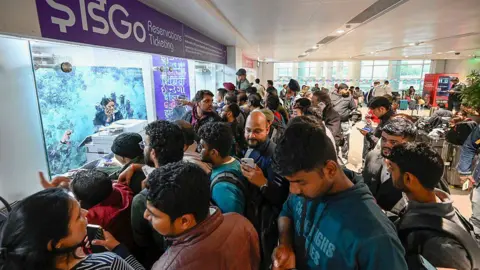
India's travel chaos has worsened after the country's largest airline IndiGo cancelled hundreds of scheduled flights on Friday after three days of widespread disruption across its network. The carrier, which has a 60% market share in India and flies more than 2,000 flights a day, has been facing pilot shortages after it failed to adapt to new crew rostering rules. Thousands of passengers are stranded across India in what's a busy travel season, with all IndiGo flights from the capital Delhi cancelled.
IndiGo has said operations will return to full normalcy only by 10 February, and has sought temporary relief on the new rules that call for more rest hours and restricted night-duty. The airline has also stated it will reduce its flight operations to minimise disruptions from 8 December.
The government has said it is closely monitoring the situation, with the federal aviation minister expressing clear displeasure with how the airline had handled the situation. In a separate statement, India's aviation regulator said the disruptions were primarily due to misjudgment and planning gaps in implementing the new flight duty time limitation rules.
The regulator has directed IndiGo to submit a detailed plan on crew recruitment, training, roster restructuring, safety-risk assessments, and other mitigation measures with immediate effect. Meanwhile, the airline has faced sharp criticism from the Airline Pilots Association of India, which argues that any relief granted to the airline undermines the spirit of the new regulations and compromises passenger safety.
Passengers have expressed outrage on social media, highlighting a lack of communication and provisions while stranded at airports, with reports of food shortages. Singapore's High Commissioner to India, Simon Wong, shared his frustration as he too was stranded, missing a staff member's wedding. Major airports in Delhi, Mumbai, and other cities have issued advisories urging passengers to check flight status before traveling to the airport.
IndiGo has said operations will return to full normalcy only by 10 February, and has sought temporary relief on the new rules that call for more rest hours and restricted night-duty. The airline has also stated it will reduce its flight operations to minimise disruptions from 8 December.
The government has said it is closely monitoring the situation, with the federal aviation minister expressing clear displeasure with how the airline had handled the situation. In a separate statement, India's aviation regulator said the disruptions were primarily due to misjudgment and planning gaps in implementing the new flight duty time limitation rules.
The regulator has directed IndiGo to submit a detailed plan on crew recruitment, training, roster restructuring, safety-risk assessments, and other mitigation measures with immediate effect. Meanwhile, the airline has faced sharp criticism from the Airline Pilots Association of India, which argues that any relief granted to the airline undermines the spirit of the new regulations and compromises passenger safety.
Passengers have expressed outrage on social media, highlighting a lack of communication and provisions while stranded at airports, with reports of food shortages. Singapore's High Commissioner to India, Simon Wong, shared his frustration as he too was stranded, missing a staff member's wedding. Major airports in Delhi, Mumbai, and other cities have issued advisories urging passengers to check flight status before traveling to the airport.