In brief
In the early days of May, a surge of violence rocked the Puna community of Hawaii’s Big Island. Police apprehended 36‑year‑old Jacob Daniel Baker on charges of three counts of murder, along with burglary, auto theft, and property damage. Baker was linked to the victims through informal, off‑grid housing arrangements, and prior restraining–order filings had been denied. The first victim, 69‑year‑old Robert Shine, was found partially submerged in a cement pond; the second, 79‑year‑old Chitta Morse, was discovered a few hundred feet away. A third victim, 69‑year‑old John Carse, was located on a property 19 miles away. Investigators say no motive emerged yet and no connection among the victims beyond proximity. The killings have raised concerns about the fragile safety nets in secluded eco‑village communities, where residents often barter labor for shelter.
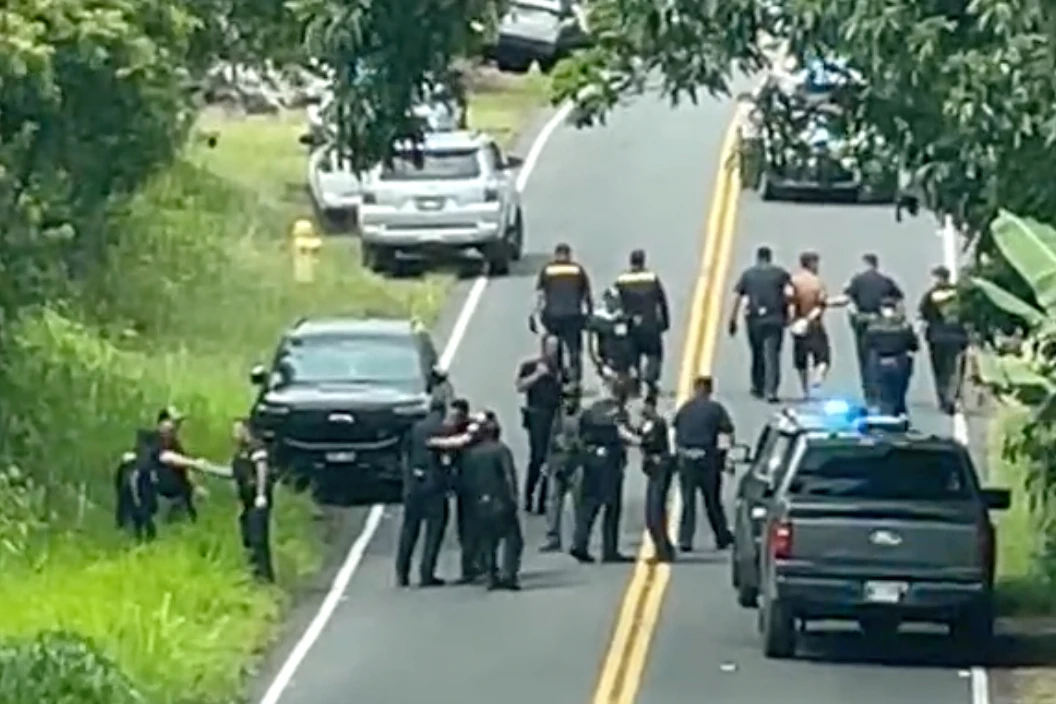
HONOLULU — A 36‑year‑old man was arrested on charges of three counts of murder in the killings that have gripped the remote Puna community on Hawaii’s Big Island. Jacob Daniel Baker was named in the Hawaii Police Department’s release as facing both first‑ and second‑degree murder, as well as additional charges of burglary, auto theft and criminal damage to property.Baker was held in pre‑trial custody without bond after a two‑day police manhunt. Police said his first court appearance is set for Monday, and it remains unclear whether he has counsel. The charges were filed two days after authorities apprehended him in the Big Island’s rural Puna region, known for its lush forests, volcanic landscapes and a free‑spirited, off‑grid lifestyle.The victims included 69‑year‑old Robert Shine, found Monday part‑submerged in a cement pond; 79‑year‑old Chitta Morse, discovered Tuesday a few hundred feet from the pond; and 69‑year‑old John Carse, located late Tuesday on a property 19 miles from the other two bodies. Police have not released a motive for the killings. Chief Reed Mahuna noted that investigators found no bonds linking the victims beyond the fact that two of them lived in close proximity.Baker’s history suggests a pattern of chaotic behavior. Court records note that he was named in 20 other cases over the past 20 years, many of them traffic infractions. In most of those instances he represented himself without an attorney.The Puna community, traditionally a haven for people seeking an off‑grid, eco‑friendly lifestyle, has long operated on informal work‑for‑lodging agreements. Stephen Shaffer, a Puna resident, said Baker had once worked for his ex‑wife, climbing coconut trees on her land in return for a place to stay. After months, the wife obtained a restraining order against Baker. However, a judge ultimately denied both temporary restraining orders filed by two women who claimed Baker had threatened and harassed them, citing insufficient proof.Donald Hyatt, a friend of Shaffer’s ex‑wife and one of the killed men, said Baker had left Shaffer’s cabin months earlier. Shortly before the killings, Baker returned, claiming “squatter’s rights” and reportedly threatened the ex‑wife.Residents are now on edge. The killings have exposed the vulnerability of isolated, off‑grid communities where law enforcement presence is limited and residents often rely on trust‑based arrangements. Police have urged anyone with information to come forward.The Honolulu Police Department has not yet announced whether Baker will receive legal representation. His case will be reviewed within the next week.The Puna area, famous for its volcano‑breached landscapes, is also a haven for people who seek solitude and community by working in exchange for shelter. The recent tragedy has spurred a conversation about the safety, governance and support structures necessary for such unconventional living arrangements.This story will be updated as more details emerge from the ongoing investigation.