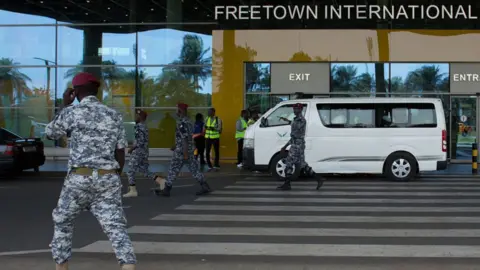
From the moment he seized power in September 2021, Guinea's Mamadi Doumbouya struck an imposing figure. Just 36 years old at the time, the broad-shouldered colonel, standing at well over six feet (1.8m), wearing military fatigues, mirrored sunglasses and a red beret certainly made an impression when announcing the coup.
A relatively unknown member of an elite army unit, he declared that the government of ousted President Alpha Condé had disregarded democratic principles and that citizens' rights were being trampled on.
After more than four years of acting as interim president, and going back on a promise not to run for leadership of the country, Doumbouya, now 41, is set to be sworn in as the elected head of state on Saturday.
The discreet, disciplined and private man won 87% of the vote in December's election against a severely depleted field. Ex-Prime Minister Cellou Dalein Diallo, now in exile, described the process as a charade which generated 'fabricated' results.
While seemingly enjoying some popular support, critics have questioned Doumbouya's democratic credentials as some political parties have been banned, activists have mysteriously disappeared and media outlets been shut down.
Scrolling back through the social media accounts from the president's office reveals a carefully curated image. The army man, now a general, has, for the main, ditched the camouflage in favour of the baseball cap and tracksuit, or a boubou - traditional Guinean attire of loose-fitting robes with elaborate embroidery. Pictures show him at the opening of schools, or transport and mining infrastructure or cycling through the streets of the capital, Conakry. The message projected is of a man of action who is working on behalf of the people.
A shift in Doumbouya’s attire aims to show he is a leader connected with civilians. Analysts argue this distancing from his military roots is strategic.
Despite a rise in popularity since the coup, many remain skeptical of Doumbouya's commitment to genuine democratic governance due to a ban on political demonstrations and the suppression of opposition voices.
The emphasis on national sovereignty and a populist agenda could define his presidency as Guinea continues to struggle with economic challenges despite its abundant natural resources.
The ongoing development of Simandou's iron-ore resources, which has the potential to transform Guinea's economy, may play a critical role in Doumbouya's political legacy.