In brief
Due to the government shutdown, the Chinle Unified School District in Arizona is feeling financial distress as after-school programs, including those providing meals, are suspended. The district relies heavily on federal Impact Aid, which is currently on hold, prompting concerns about the potential elimination of other educational services. Local officials are urging for quick resolutions as students face food insecurity.
In Chinle, Arizona, financial distress caused by the government shutdown has led to the suspension of after-school programs, including some that students rely on for meals.
Federal money makes up only a small part of most school budgets in the U.S. But at Chinle Unified School District — spread across 4,200 square miles in the heart of Navajo Nation — half of the revenue comes from a single federal program, called Impact Aid.
School districts typically depend on local property taxes to fund teacher salaries, but those on Native American reservations, such as Chinle, have fewer options for raising local taxes. Federal land isn’t taxable, and the government holds much reservation land in trust for native tribes.
The federal government typically contributes $1.6 billion a year in Impact Aid to these schools, but payments are suspended this year, leaving schools to ponder how long they can go without deeper cuts.
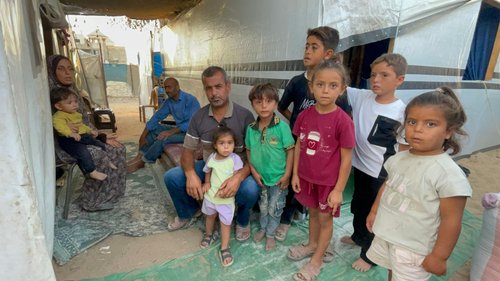
“The kids maybe are going home and not eating, because these are the only three meals they may get in a day,” said Quincy Natay, Chinle’s superintendent. “All of those programs are on hold, and we’re looking at, ‘What programs can we eliminate?’”
Food aid for families has also been disrupted by the shutdown. Two federal judges ordered the Trump administration to use contingency funding to pay out Supplemental Nutrition Assistance Program benefits, but the government warned it could take weeks or longer to restart partial payments.
Most federal money for school systems arrives before the start of the school year. However, Impact Aid is typically delivered annually starting in October, impacting about 1,000 districts serving nearly 8 million students. Arizona receives the highest amount from this program due to its military bases and tribal lands.
Districts that depend on this funding often maintain a cash reserve to buffer uncertainties, but many are already feeling the strain. In Chinle, the $30 million in Impact Aid goes toward essential services like teacher salaries and full-day kindergarten. If payments do not resume soon, the district may need to borrow funds to meet payroll.
“Several of our districts are scaling back,” said Cherise Imai, executive director of the National Association of Federally Impacted Schools. “They’re going into their reserves, or whatever other funding they can use to meet payroll.”
In a letter to the Education Department, several congressional Democrats from Arizona have urged the administration to reverse layoffs affecting Impact Aid program staff. They expressed concern that these layoffs could cause substantial harm to schools across the state.
“We are deeply troubled by these layoffs and their potential to cause irreparable harm in schools across our state,” they wrote, adding that a judge previously blocked all layoffs made during the shutdown.
Concerns over the situation continue as school officials stress the need for funding clarity and the urgency to address the challenges faced by districts like Chinle.